
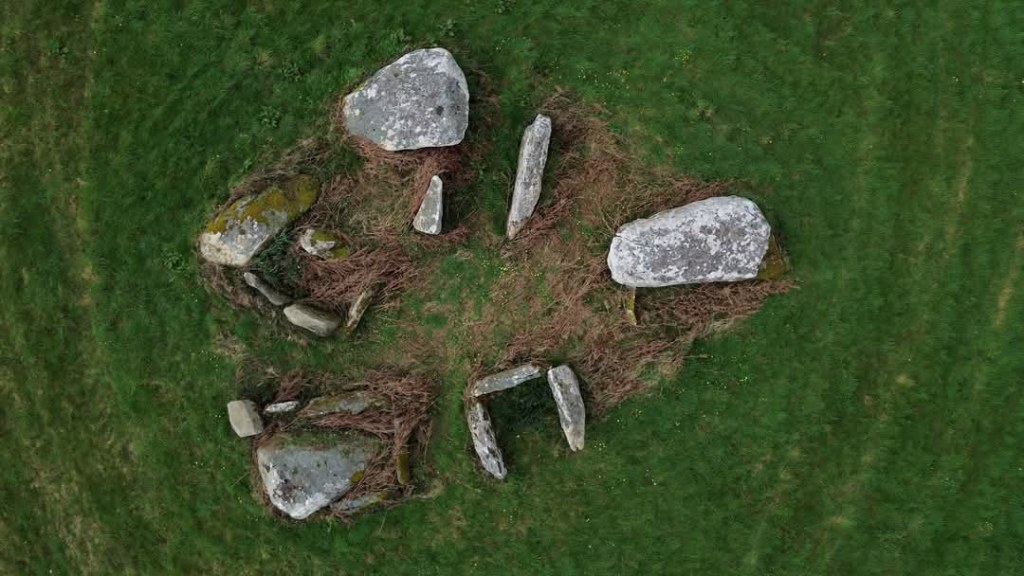

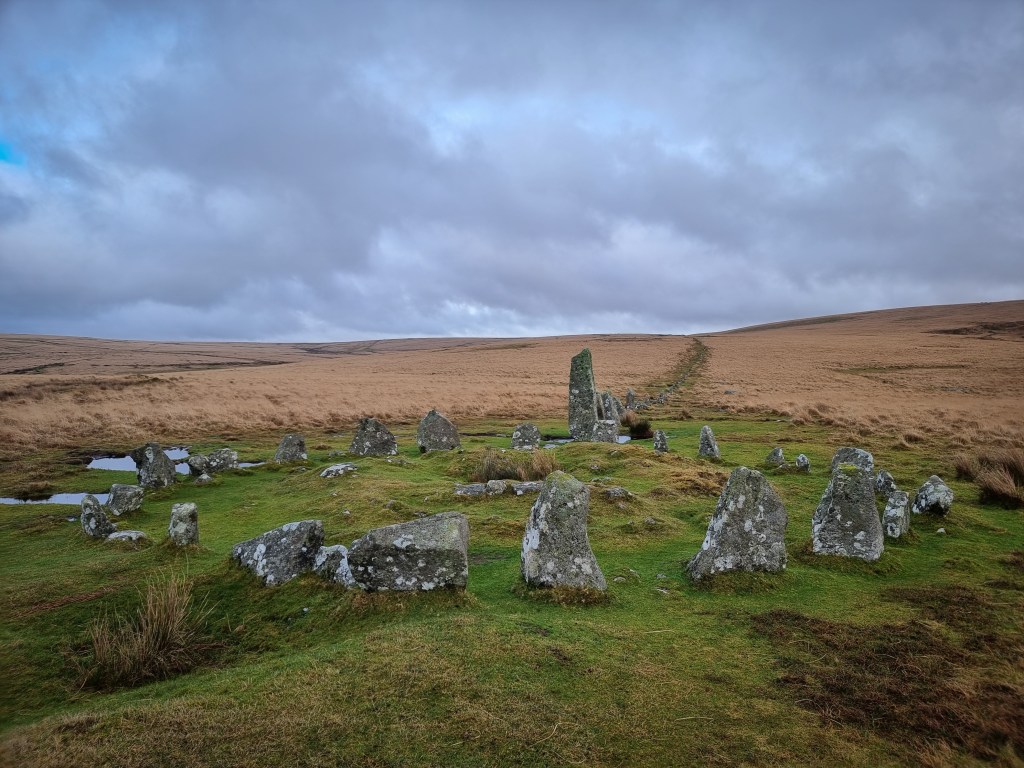
This site sits in a field overlooking the coast near Newport in Pembrokeshire, Wales.. It’s been a site of great interest to antiquarians and archaeologists for hundreds of years and we had been been eager to visit for some time!
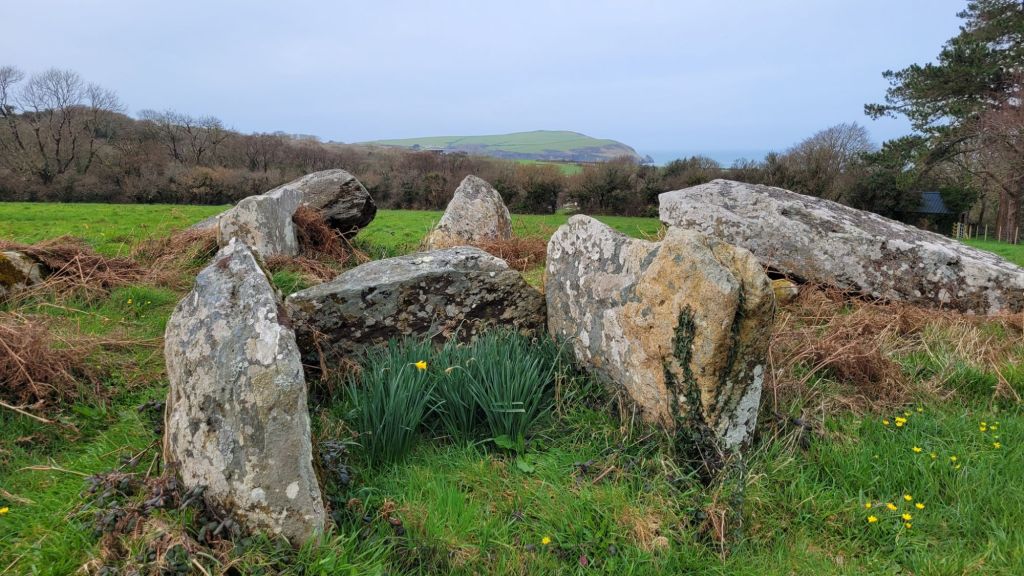
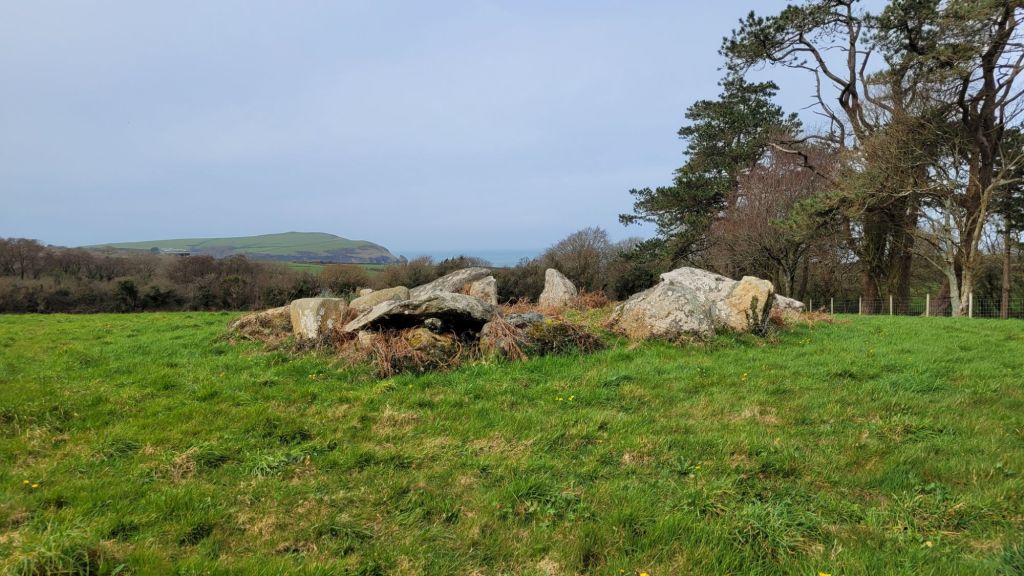
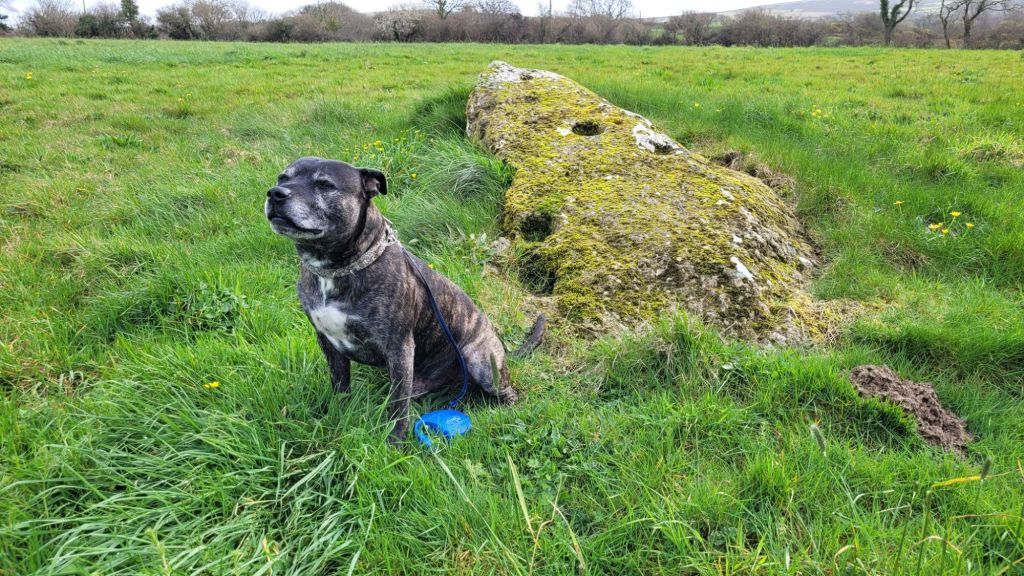
In Pembrokeshire we have a large concentration of dolmens that survive today. From the classic portal dolmens to ones sometimes called “earth fast” dolmens. But Cerrig y Gof is a curious site in it’s uniqueness to other surviving megaliths in the area, and Wales as a whole..
The earliest account we found of this site is from Lluyd, in 1695:
“In Newport-parish there are five of these Tables or Altars (that we may distinguish them by some name) placed near each other, which some conjecture to have been once encompass’d with a circle of stone pillars, for that there are two stones yet standing near them. But these are nothing comparable in bigness to the Cromlech [Pentre Ifan], and not raised above three foot high; nor are they supported with pillars, but stones placed edgewise…”
We actually first came across mention of Cerrig y Gof while researching another megalith. In A Historical Tour Through Pembrokeshire, published in 1810. The author, antiquarian Richard Fenton, describes digging around Cerrig y Gof, “removing the lid stones” and finding various artefacts.
From A Historical Tour Through Pembrokeshire, by Richard Fenton, 1810:
“Leaving Newport I pursue the Fishguard road, and after a pleasant ride of three miles, with the noble mountain of Carn Englyn on the left, and the ocean on the right, with the bold promontory of Dinas and its correspondent headland of Ceibwr here straitening it into the bay of Newport, I come to a singular cluster of Cistvaens, which, having provided myself with labourers, I was prepared to open, permission being very politely granted me for that purpose by George Bowen, Esq. of Llwyn gwair, on whose property they were.
This group, consisting of five placed in a circle, radiating from a centre once occupied by what is denominated a Cromlech, long since overturned, stood on a gentle rising in a field to the right of the road, and was almost hid, being overgrown with weeds and briars, and, by several upright stones still to be traced, seemed to have been surrounded by an extensive circle of such, forming the mysterious precinct.
Having removed the lid stones of the cists, and digging down about a foot through fine mould, I came to charcoal, and soon after discovered pieces of urns of the rudest pottery, some particles of bones, and a quantity of black sea pebbles. I opened them all, and with a very trifling variation of their contents found them of the same character.
In the vacant space between each Cistvaen, as well as in the centre over which the Cromlech had been raised, I likewise dug, but found nothing indicatory of sepulture, furnishing a strong presumption that it was for a very different use..
Before I had made this experiment on so many together, I think perfectly decisive of their use, there was every reason to suppose, from the form and name of the Cistvaen, that it was sepulchral, and perhaps for the Druids only, particularly when, like these, they differed so essentially from what in general we meet with: yet it still remains to be ascertained for what purpose that relic of remote antiquity called the Cromlech, though too often confounded with the other, was erected, and about which antiquaries in their opinion are still divided. This spot was most probably in the midst of woods, the farm that it is near, though now not very productive of trees, being called the Forest.”
Here is our video covering all the known history and archaeology of Cerrig y Gof-
 CoralJackz - That History Couple
Leave a comment