
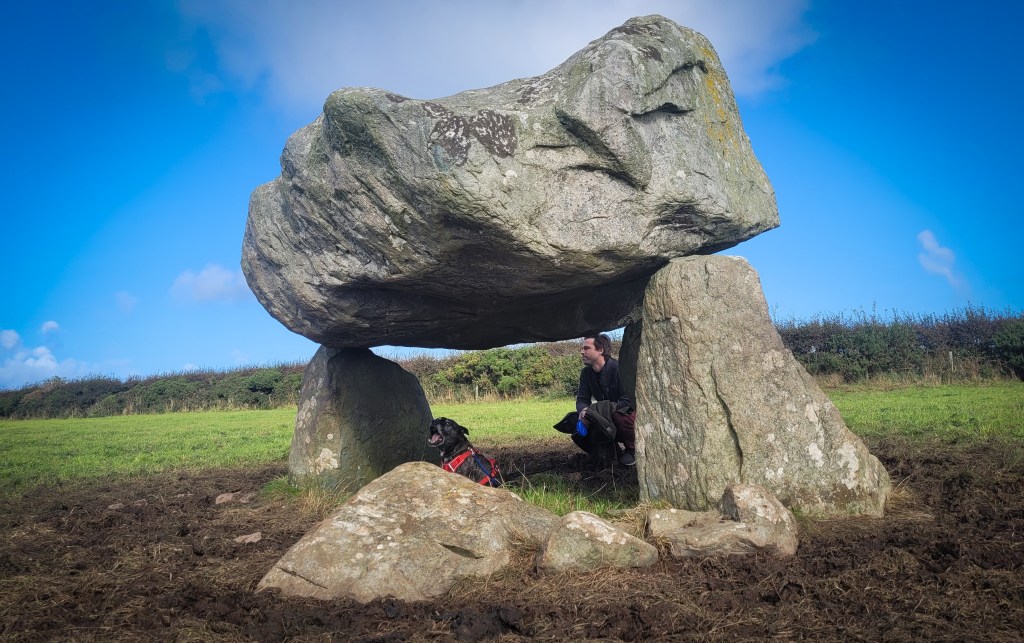

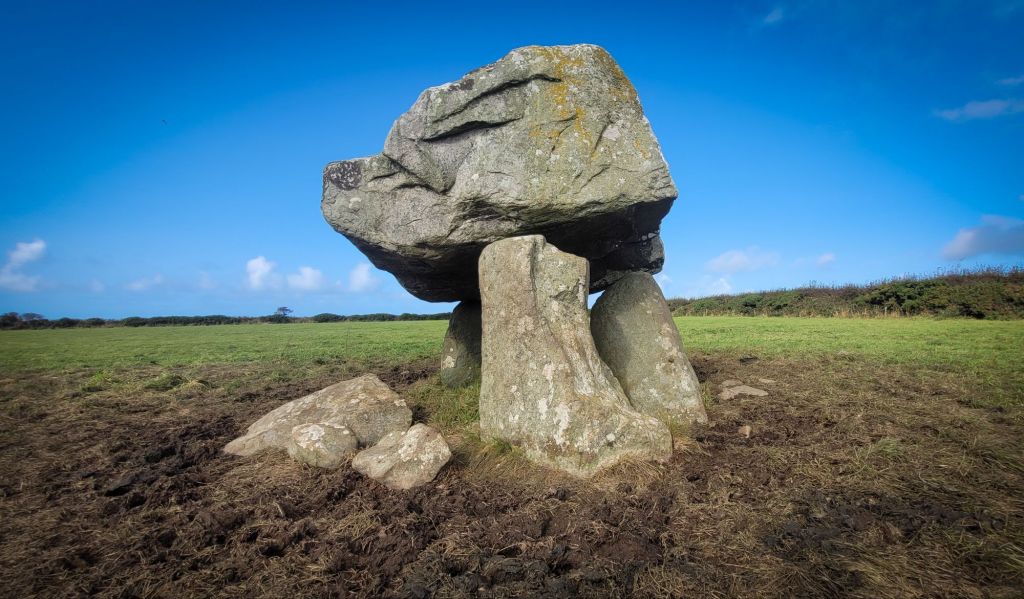
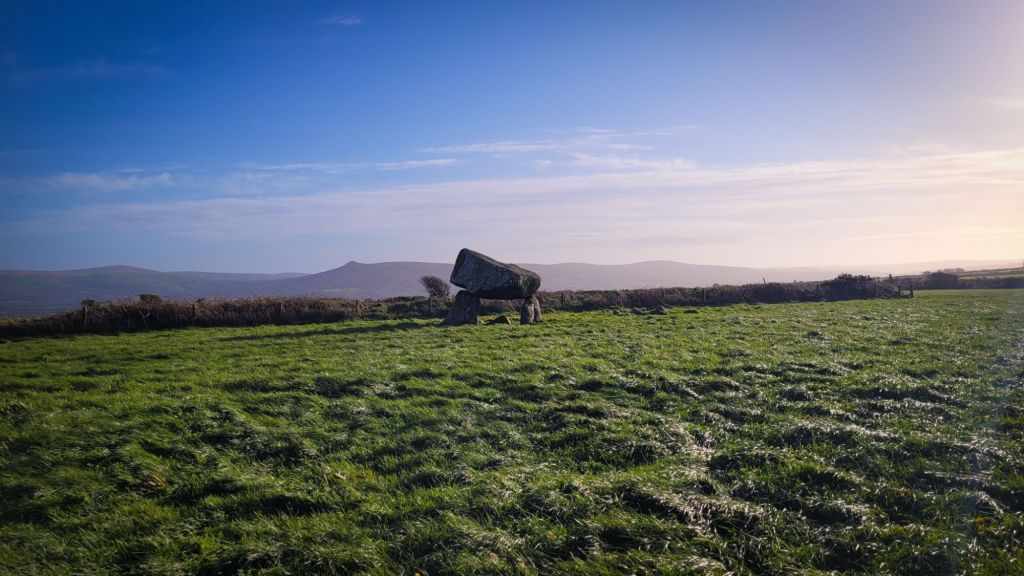
Llech y Drybedd is an impressive Neolithic cromlech near Moylegrove in Pembrokeshire.
Coflein describes the site as.. “A free standing megalithic chamber, with earthfast stones supporting a substantial capstone: no traces of a mound are mentioned.”
There is no designated parking at this site, so we park in Moylegrove and walk along the road. Here is a screenshot of OS maps:
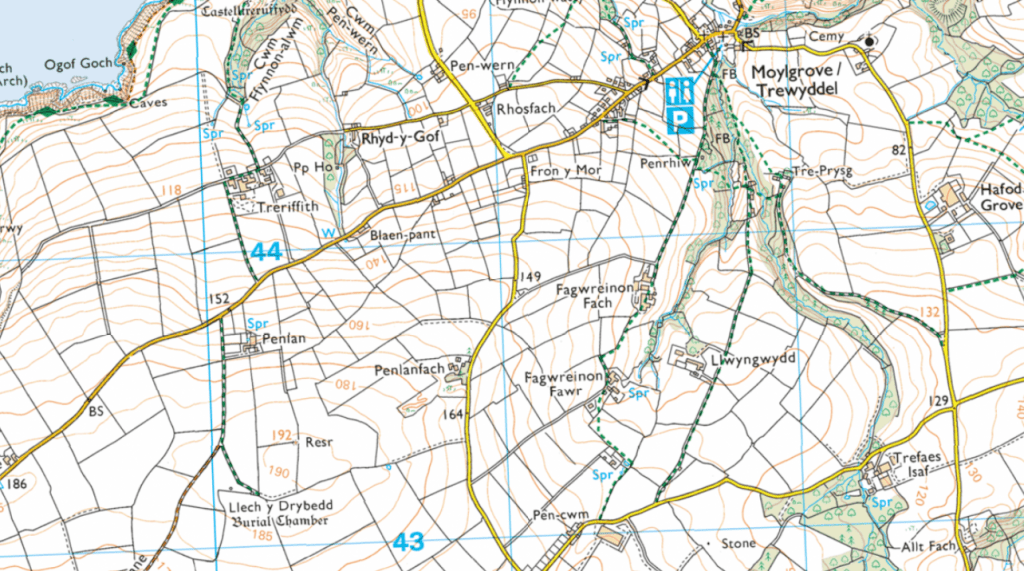
Whilst looking through old books for any information on this ancient megalith and it’s associated folklore and legends, we found that like many other cromlechs.. this one’s name has had many different mutations over the years. So.. while there could be some legends linked to this site, perhaps they’ve been lost to the world of linguistic mutations, mistranslations and general renaming of things.
In “A historical tour through Pembrokeshire”, antiquarian Richard Fenton visits the site and uses a picture drawn by Sir Richard Hoare, for the front page of his book. The following is quoted from this book..
…”I call on my friend John Evans, Esq. of Glastir, and in company with him and a guest of his, the Reverend Mr. Owen, who was then on a visit to his native country after an absence of twenty-one years, ride to see Llech y dribedd, one of the most perfect of that species of druidical relics called Cromlech we have in the county. It is supported on three upright stones of no great height; there was another stone, as is frequently seen but not in contact, overturned. The incumbent stone is not so flat as usual, being of immense bulk, and about forty feet in circumference, nearly round, and its mean thickness from three to four feet. The stone is of a very peculiar kind, being of a blueish colour, very hard, yet yielding a little to an edged tool; the south-east side of the stone being superficially marked all over with initials of names for these two hundred years, and one corner worn down into a perfect hone by the shepherds. Mr. Evans, my Cicerone, who is the proprietor of this venerable relic, with a zeal which does him honour, -takes great pains to preserve it. At the west end of the field in which it stands towards the sea, I pass a stone called Maen y tri thivedd, or the stone of the three heirs, the possession of three different men having met there. “ – https://archive.org/details/b22013179/page/n7/mode/2up

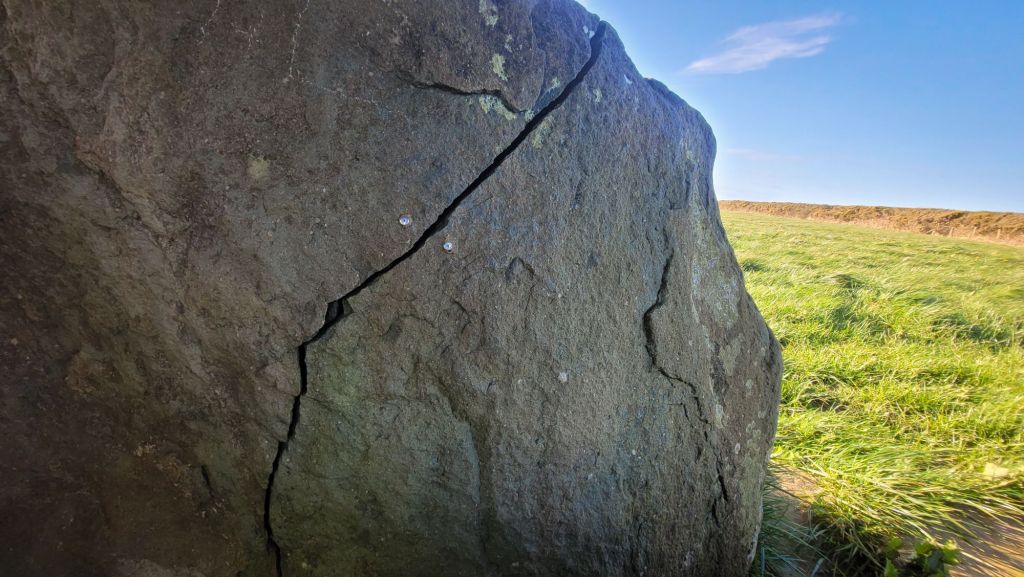
The lower parts of the uprights have been worn smooth from years of grazing animals rubbing up against them, and when we last visited, there was evidence that cattle had recently been in the field.. There is a large crack in one of these supporting stones, with two rivet heads either side that could be used to measure the movement between the two sides of the split.
Here is our video covering Llech y Drybedd –
 CoralJackz - That History Couple
Leave a comment