
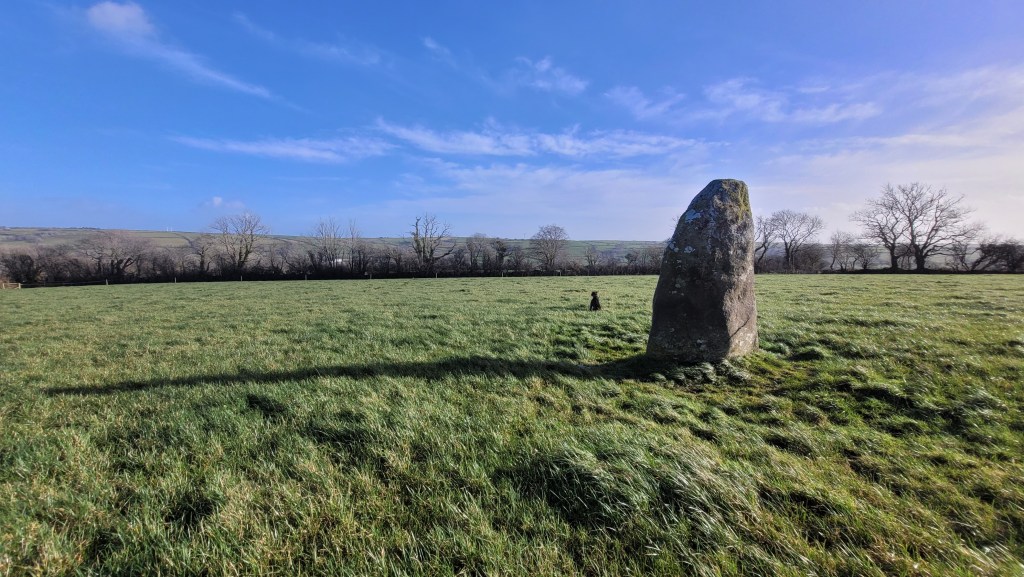

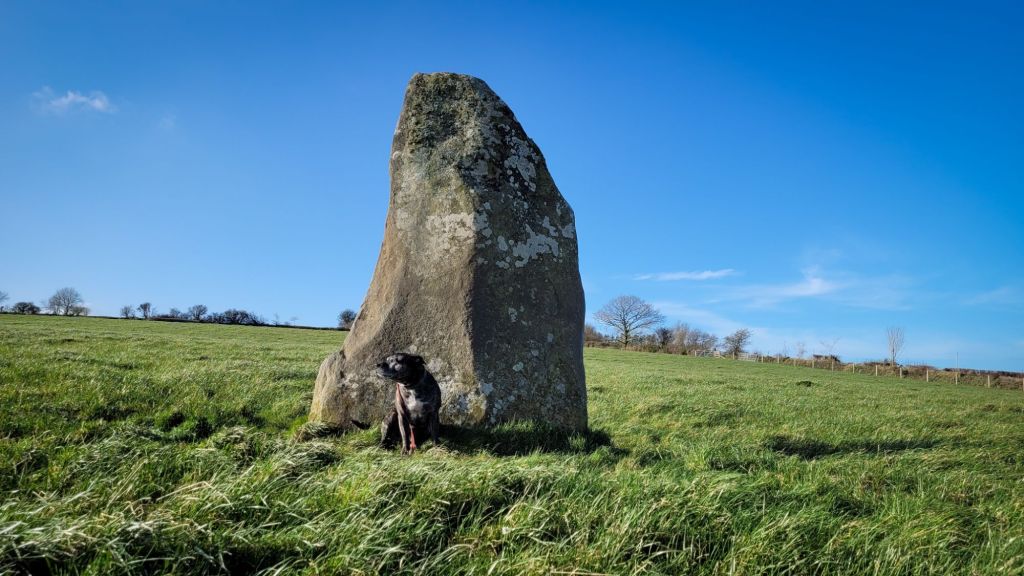
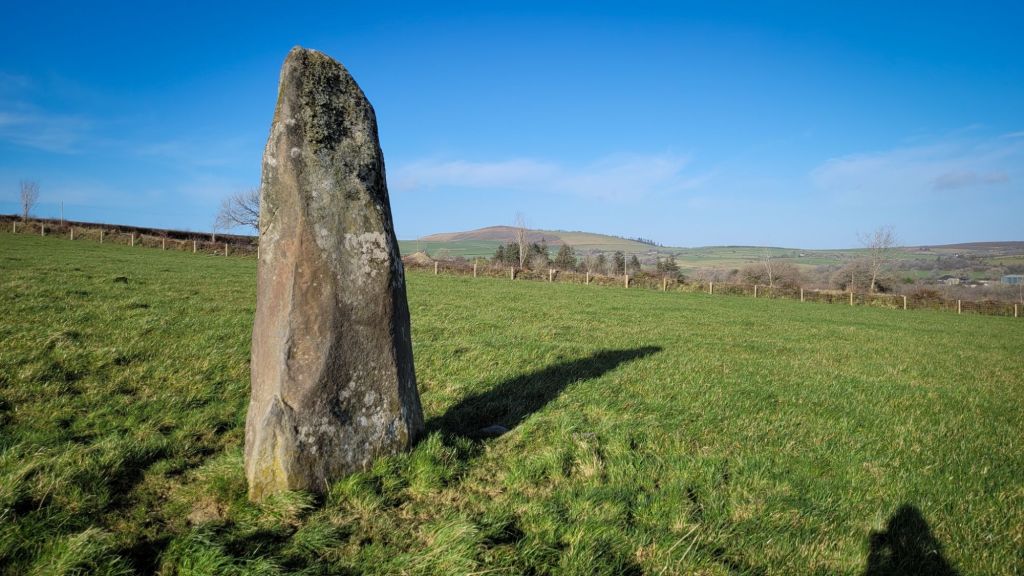
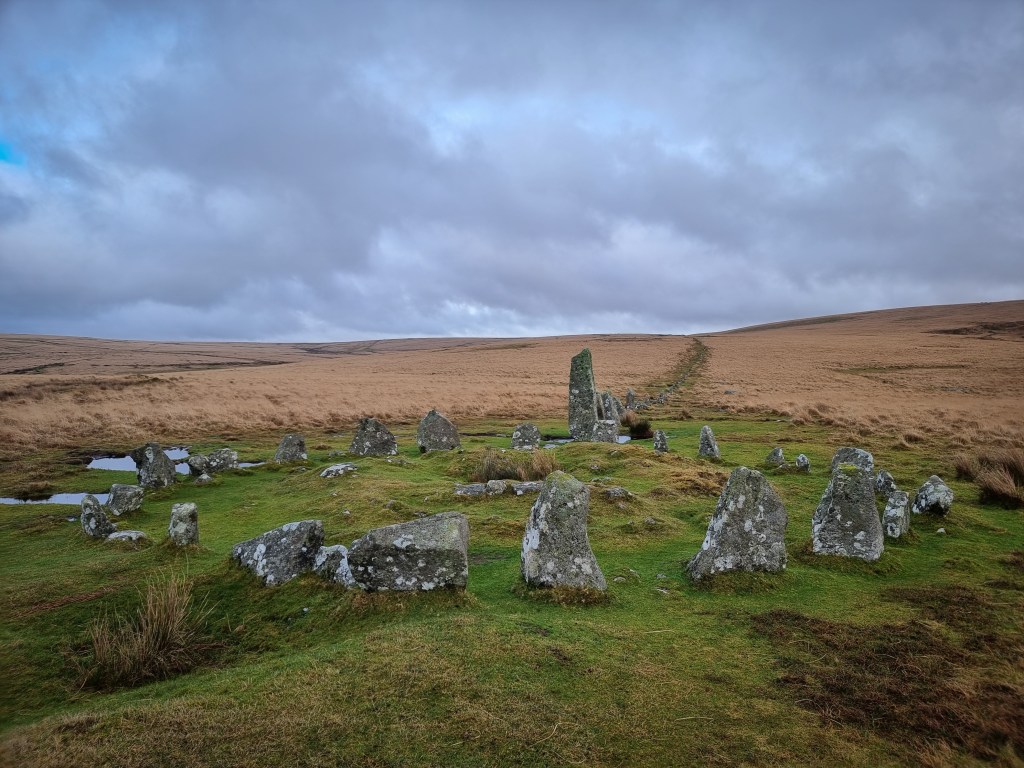
Standing stones between Hermon and Llanfyrnach. There is a third stone in these fields which we couldn’t access due to cows. We will update photos when we visit there next.
Grid References for the stones:
Llanfyrnach Standing Stone A – SN20753141
Llanfyrnach Standing Stone B – SN20793121
Llanfyrnach Standing Stone C (Parc y Maen) – SN21163105

Antiquarian Records:
The following is from Richard Fenton’s ‘A Historical Tour Through Pembrokeshire’, published in 1810:
“..Still pursuing the vale, and at no great distance from the margin of the river, I come to Llanvyrnach church, of mean structure, with a glebe-house near, having an air of neatness and comfort. Not far from this church, adjoining a farm-house, is an immense tumulus, such as so frequently occurs in this county ; and as I have often had occasion to remark, might have been in after ages surmounted with the usual wooden castelet for the defence of the pass.
Though all the churches in this district, and all round the range of our mountains, are dedicated to St. Bernach, this is the only one that bears his name ; and Edward LLhwyd, in a MS. note of his, has preserved a curious tradition to account for it. On the saint’s coming into this country, he first stopped at Llanbeudy, where he was lodged in a cowhouse and therefore gave the church a name significant of his reception ; from thence he went to Cilymaenllwyd, where missing entertainment, he was forced to shelter himself under a grey stone an Maen llwyd, and so named the church ; but at Llanfyrnach, being better treated, he called the church after his own name.
Still following the course of the Tave, I come to the lead mines of Llanvyrnach, situated close to the banks of the river, where, though now stopped, there are evident indications of its having been a great work…”
– https://archive.org/details/b22013179/page/485/mode/1up?ref=ol&view=theater&q=llanfyrnach
The following is quoted from Archaeologia Cambresis (1911) by The Rev W. Done. Bushell:
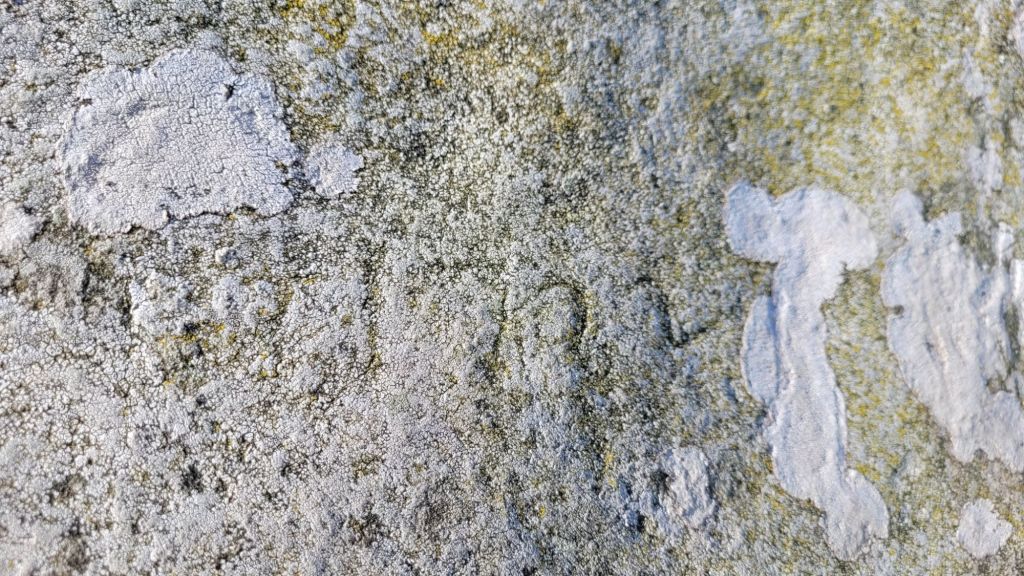
“LLANFYRNACH. (Church of Brynach). -Lastly, it should be mentioned that there are some noble menhirs at Llanfyrnach, which is three miles south-east of the Crymmych Arms. There is no circle now to be seen, but at Rhyd-y-Garth, three-quarters of a mile from the church, there are two maenhirs about 70 yards apart, which give an azmuth of 32°. The height of the larger stone is 8ft 6in, and its circumference at the base 12ft. There is also a cairn on the mountaintop in line with the two stones, as well as a fine tumulus, 70ft by 30ft, whos axis has an alignment north-east and south-west. This tumulus has, I was given to understand, been opened, but without result. No bones or other remains were found in it. The cairn and tumulus are at a height of about 600ft above the level of the sea. There are two other maenhirs also in the immediate neighbourhood, and yet another pair of stones at Pant-y-Gwyddal, which is a little south of Llanfyrnach Church.
And at Llanfyrnach, as at Clyn-saith-maen, we are in a land of legend and romance. St. Brynach, after a pilgrimage to Rome, is said to have returned to Brittany, and thence to Pembrokeshire, where, after various wanderings, he took up his abode at Nevern. But on his arrival he first stopped at Llanboidy (Church of the Cow-house), so called from his being forced to sleep in a shed. From thence he went to Cil-y-mane-llwyd, where he was refused all shelter, and obliged to sleep under a “grey” stone. However, at Llanfyrnach, he was made welcome ; and there, by the side of a spring, he built his cell, and also an oratory, which was subsequently called after his name ; see Barin-Gould and Fisher, ‘Lives of the British Saints’, i, 322. We are also told by Fenton that at no great distance from Llanfyrnach Church, adjoining a farm-house, there was an “immense tumulus”. He also speaks of a solitary maenhir on a neighbouring tract of common called Rhos Llandyssilio (The Meadow of the Church of St. Tysylio)> See Fenton, new ed, p264.” – https://journals.library.wales/view/4718179/4723583/330#?xywh=-86%2C-206%2C1927%2C2004
 CoralJackz - That History Couple
Leave a comment