

St David’s Church in Llanllawer – Pembrokeshire, Wales. (Older name – Llanllawern)
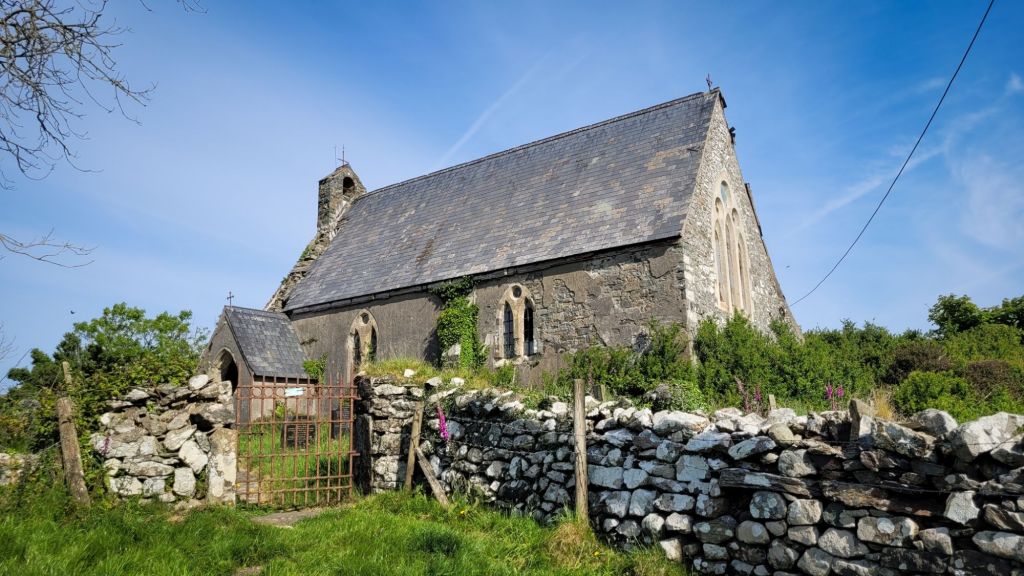

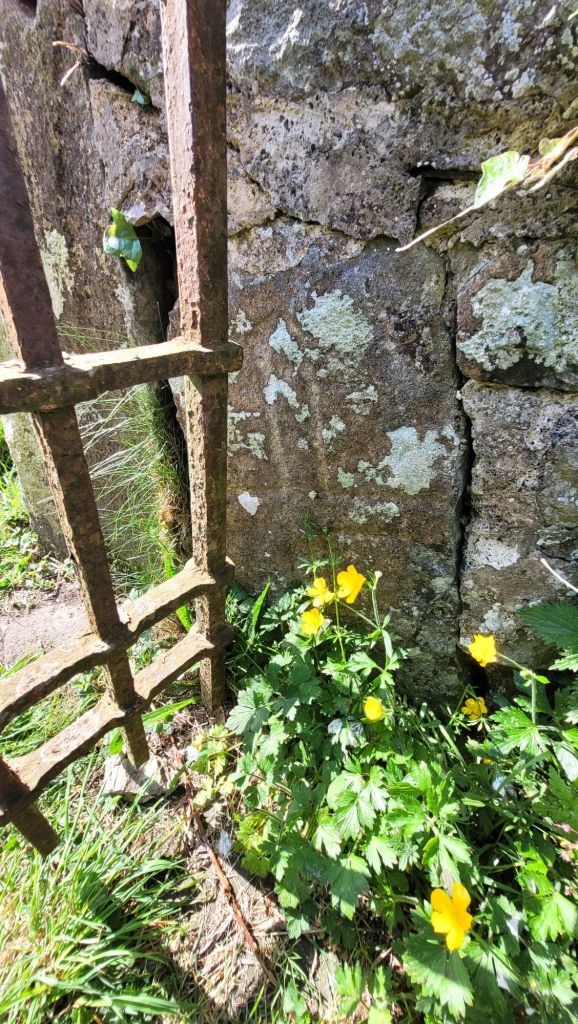
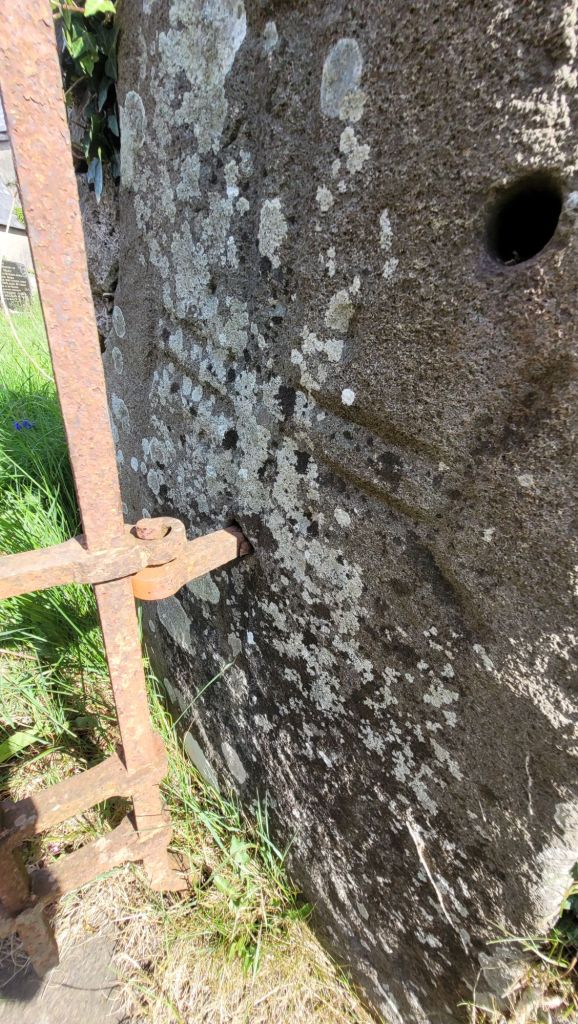
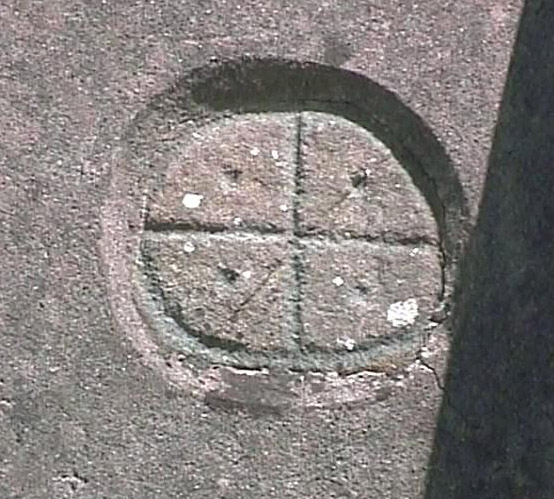
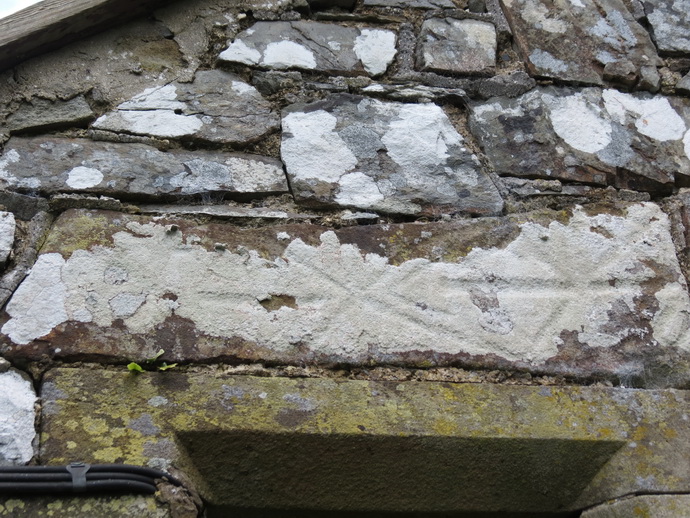
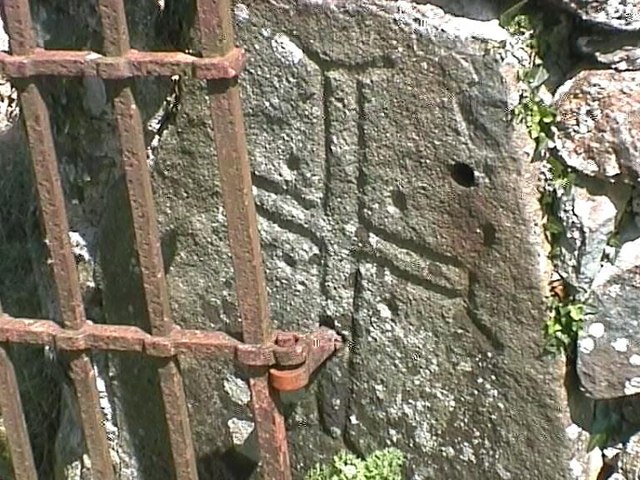
The church stands of a promontory above the River Gwaun and the village of Llanychaer. At this church are four medieval inscribed stones – two used as gate posts and two others incorporated into the church building itself. The stones are thought to date to the 9th-11th centuries.
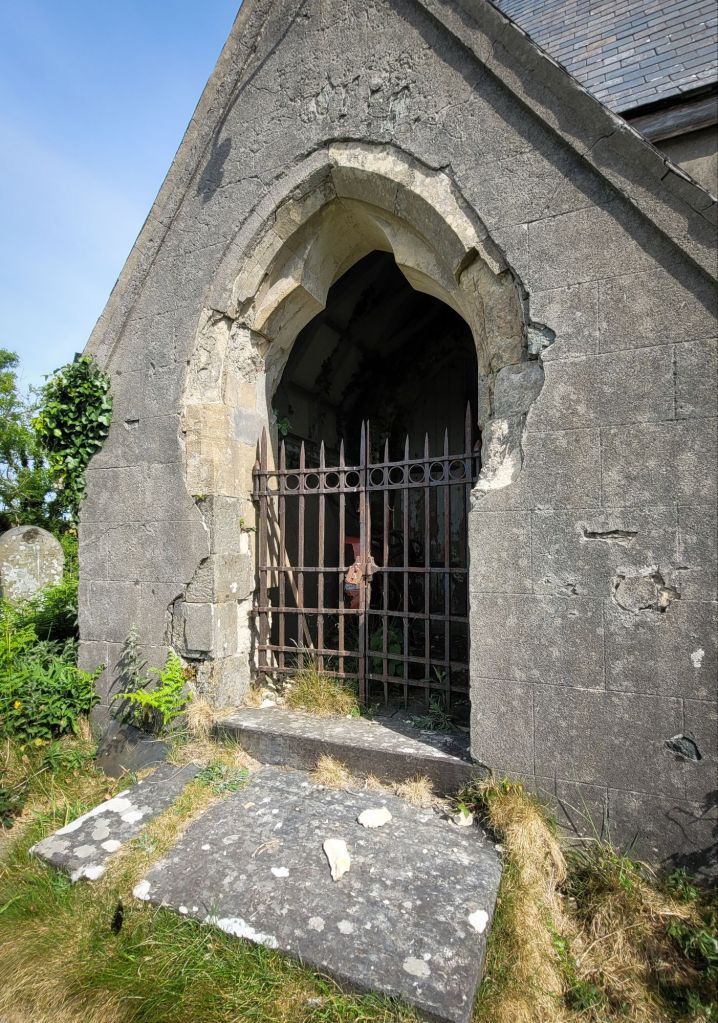
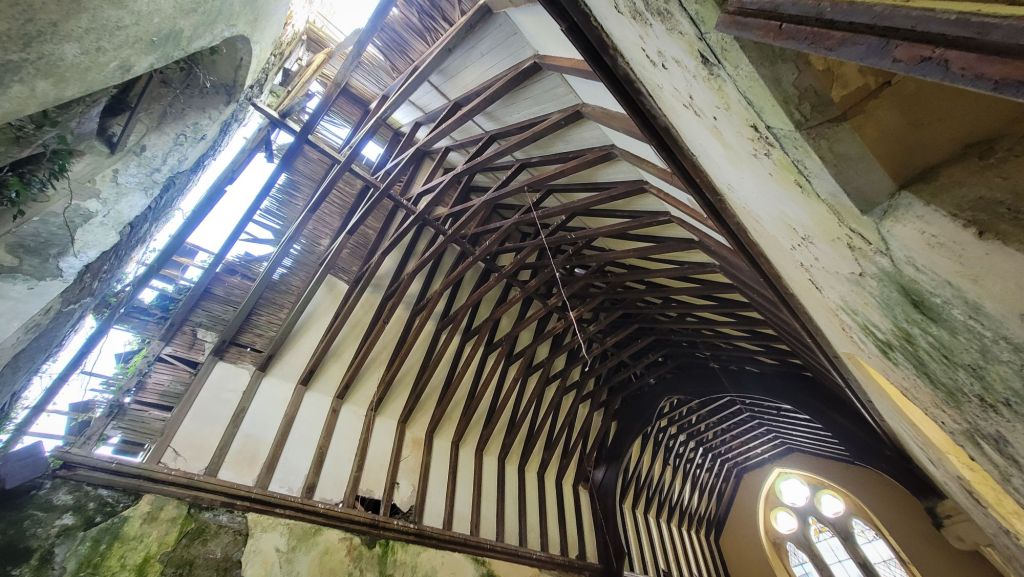
The form of the medieval church building is unknown. It was entirely rebuilt in 1860 on the same spot.
The following is quoted from Coflein:
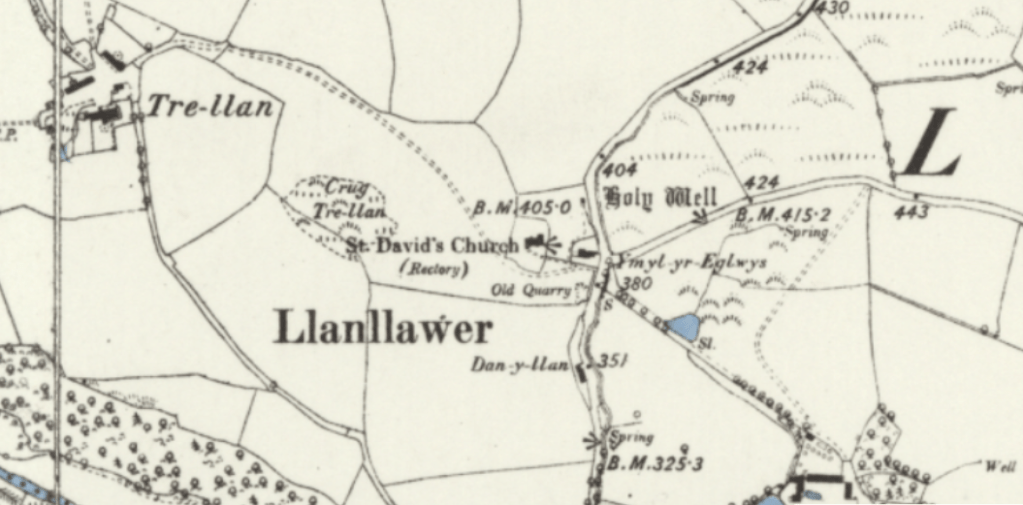
“St David’s church is situated within a quadrilateral churchyard which encompasses a spring. The current churchyard lies within a larger, circular enclosure. The circular enclosure measures some 95m in diameter and its southern half appears to be mirrored by the footpath which passes to south of the current churchyard, but would have been within the circular enclosure. It appears to encompass Llanllawer Holy Well, also known as Ffynnon Gapan, some 40m away. In 1925 Ffynnon Gapan was referred to as being within the enclosure of “Ymyl yr eglwys” – “the churchyard preceincts”.
First edition Ordance Survey mapping depicts a circle of orthostats (c.600m diameter) surrounding the churchyard.” – https://coflein.gov.uk/en/site/308778
“At the foot of one of the walls is an ancient stoup – a stone basin fed by a spring, which it is said, never runs dry. Some years ago, the bell was removed from the bellcote for safety reasons – sadly it is not known where it is now.
It is likely that this is an ancient Christian site with its hill top prominence and possibly an even older holy well site, nearby. The existing building dates from 1860 when it was rebuilt on the foundations of an earlier medieval church. Little is known about the medieval church other than a description of it by the architect involved in the building of its replacement.
Robert Jewell Withers was a London architect who was involved in the rebuilding and restoration of numerous church sites in West Wales. He described the old Llanllawer Church “as being dilapidated and almost roofless with a local population of 123 and no income whatsoever”. A new Clergyman, Rev. D.O. James was appointed in 1858 and he was appalled to discover that “the church was denuded of all fittings and the parishioners have nothing to rest themselves upon but the remains of the Communion table and rails”. He quickly set about raising funds for its rebuilding – Robert Withers was engaged to prepare a design, the contract was let for £400 and the builder was Mr James of Llanychaer. In July 1860 the first service was held in the new church.
A survey led by archaeologist Jack Rowe of Dyfed Archaeological Trust has shown that the original churchyard was larger with evidence revealed by a geophysical survey, of a ditch and possible entrance to the south of the present graveyard boundary. During the survey the churchyard was partially cleared of undergrowth and the gravestones in that area were plotted and recorded.” – https://www.hanesabergwaun.org.uk/places/churches-and-chapels/general/llanllawer-church

The following is quoted from ‘Saints and stones : a guide to the pilgrim ways of Pembrokeshire’ by Damian Walford Davies & Anne Eastham:
“Located in a field near the disused church of St David, at the point at which the lane begins to descend sharply towards the village, is Llanllawer Holy Well. The church was rebuilt in the 19th century, incorporating two 9th or 10th century cross stones, one in the south wall, the other as a linted on the north side. On the gateposts into the churchyard are carved two wheel-crosses. The churchyard itself was originally elliptical in shape. It is thought that many of the circular graveyards found in north Pembrokeshire and elsewhere are of ancient, in some cases pre-Christian, origin.
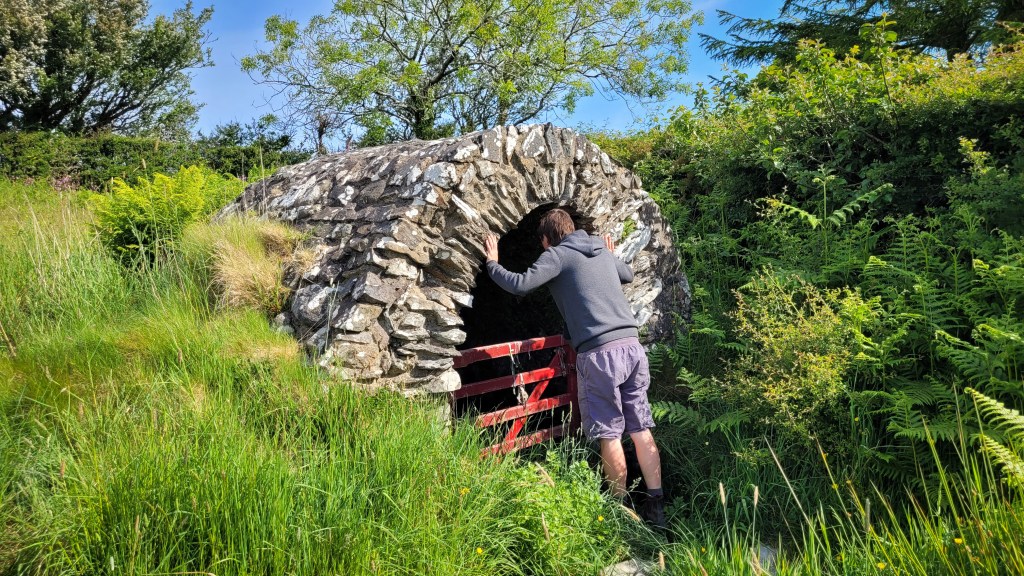
The well is a medieval voussoired vault over a clear bubbling spring. It has the remains of step or bench structures in the interior to assist in bodily immersion. Richard Fenton (1810) records it as a healing well, especially efficacious in the treatment of eye complaints, and it was by local tradition both a wishing and a cursing well. Coins and pins were offered, with a straight pin conferring a blessing and a bent pin misfortune on the object of the wish.
Looking south from this point, the view across the Gwaun valley into the Trecwn gorge can be breathtaking. Out of the gorse flow the Aer and the Nant y Bugail rivers, the one into the Gwaun, the other towards the Cleddau.
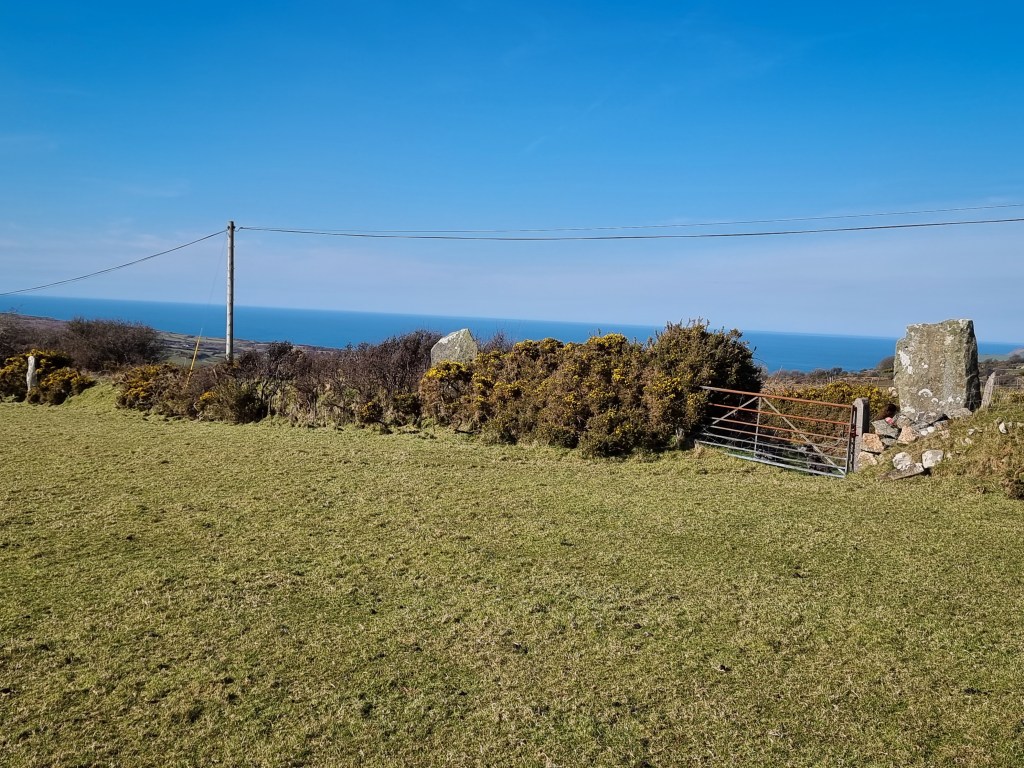
Opposite the well, a turning to the left leads up Mynydd Dinas. Just over 0.5ml from the turning, a line of four large stones stand towering above the road in the bank of a field called Parc y Meirw. *Click here for our page with more information regarding Parc y Meirw* –
– https://archive.org/details/saintsstonesguid0000davi/page/18/mode/1up?view=theater&q=llanllawer
 CoralJackz - That History Couple
Leave a comment