
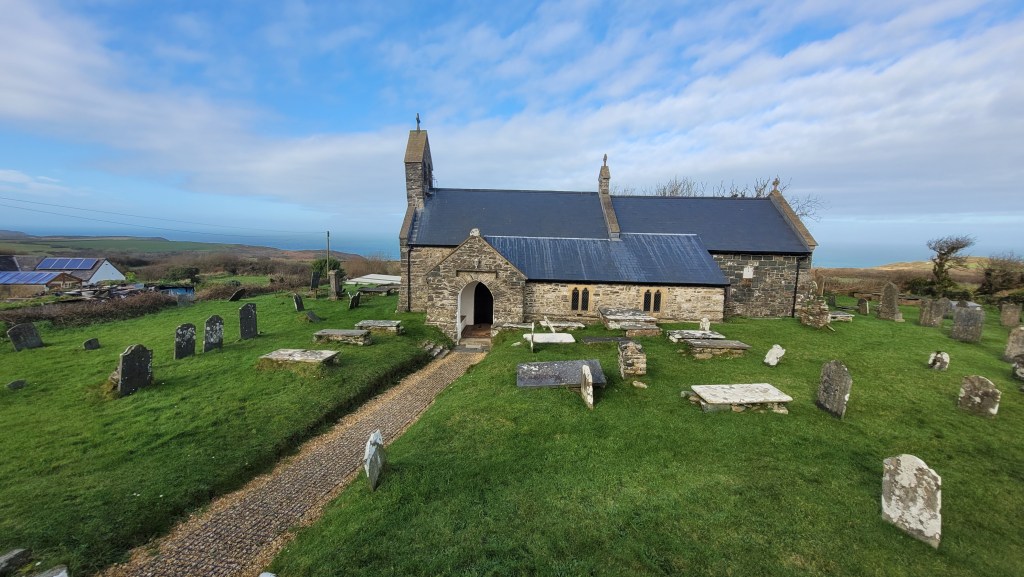

In the village of LLanwnda in Pembrokeshire, Wales is St Gwyndaf’s Church. This is an interesting village full of history. We originally visited here to see the Neolithic cromlech Garn Wnda, but soon discovered that the church also has an interesting past..
A short walk north west of the church is Carregwastad Point. In 1797, some fourteen hundred French troops landed at this rocky point, ready to invade. This event is known today as The Battle of Fishguard.
“Upon landing, the French invasion force appear to have run out of enthusiasm. Perhaps as a result of years of prison rations, they seem to have been more interested in the rich food and wine the locals had recently removed from a grounded Portuguese ship. After a looting spree, many of the invaders were too drunk to fight and within two days, the invasion had collapsed: Tate’s force surrendered to a local militia force led by Lord Cawdor on February 25th 1797.” – https://www.historic-uk.com/HistoryUK/HistoryofWales/The-Last-Invasion-of-Britain/
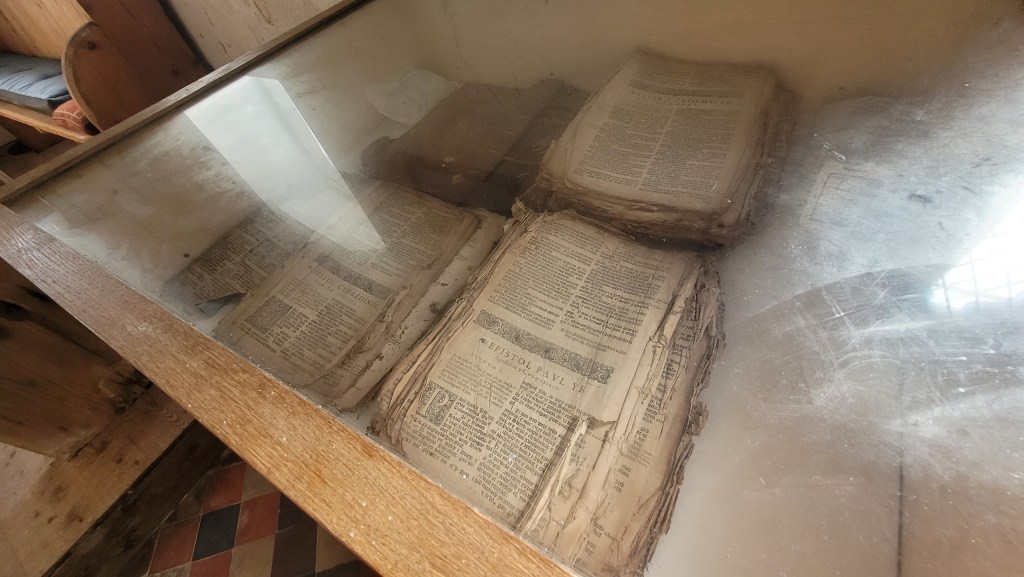
During the Battle of Fishguard, invading soldiers raided many homes, and some broke into the nearby church of St Gwyndaf, thought to be seeking shelter from the cold and wet. Damage was caused to the church, as well as a Welsh bible from 1620, which after having been restored, now sits in a glass case within the church. It is speculated that the soldiers tried using the bible for kindling.
The parish church of St Gwyndaf was founded over twelve hundred years ago and was used by pilgrims travelling between St David’s and St Dogmael’s. Gerald of Wales (1146-1223) held the living here for a while.
The structure we see today dates from the 13th to 15th centuries but refurbishments took place in the 19th centuries.
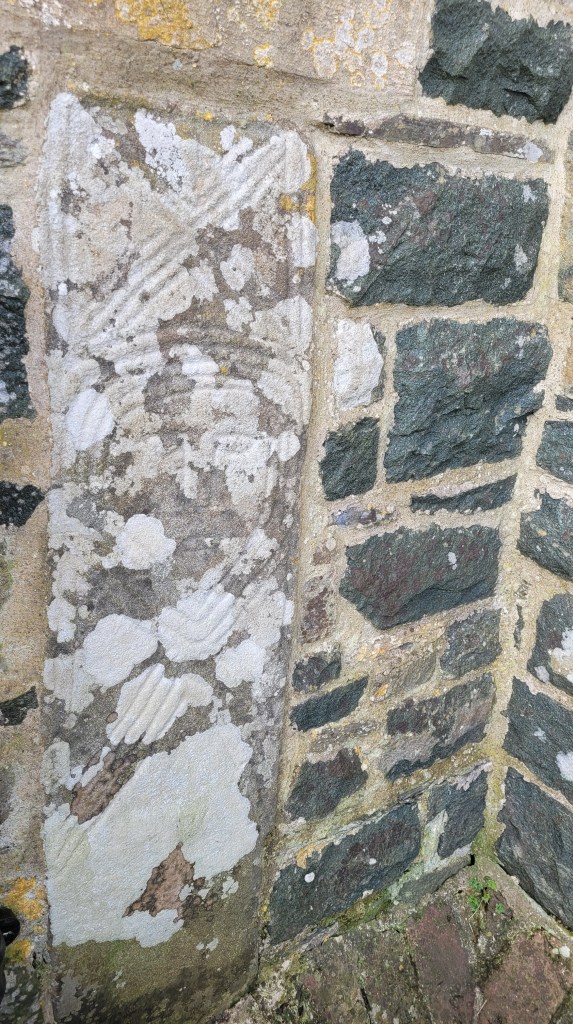
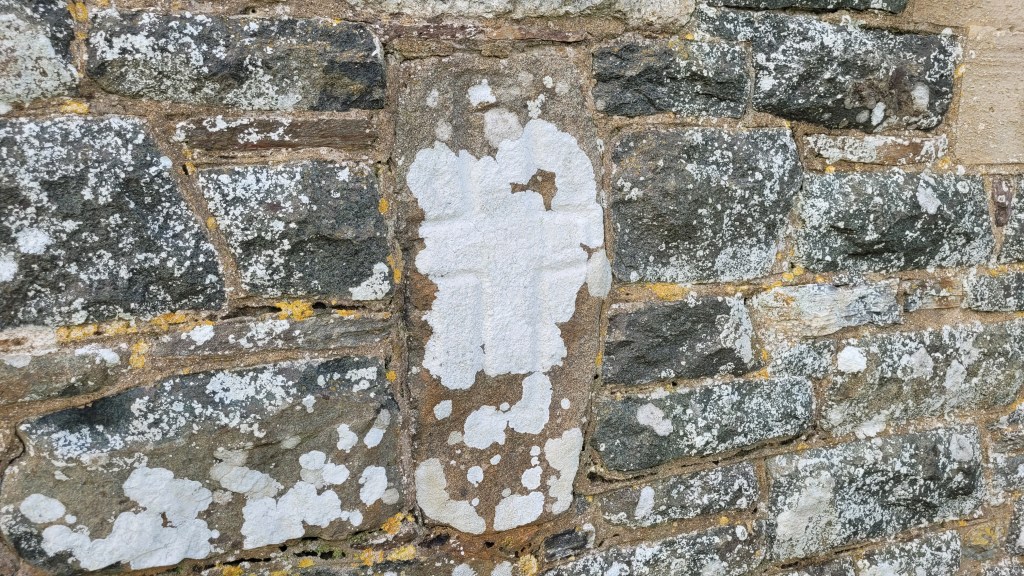
The church also has several carved Celtic stones built into the walls. According to the national churches trust, these were picked up from the land and used in the Victorian refurbishment. One Celtic stone remains in situ in the graveyard.
The following is from ‘Saints and Stones: a guide to the pilgrim ways of Pembrokeshire’ written by Damian Walford Davies and Anne Eastham:
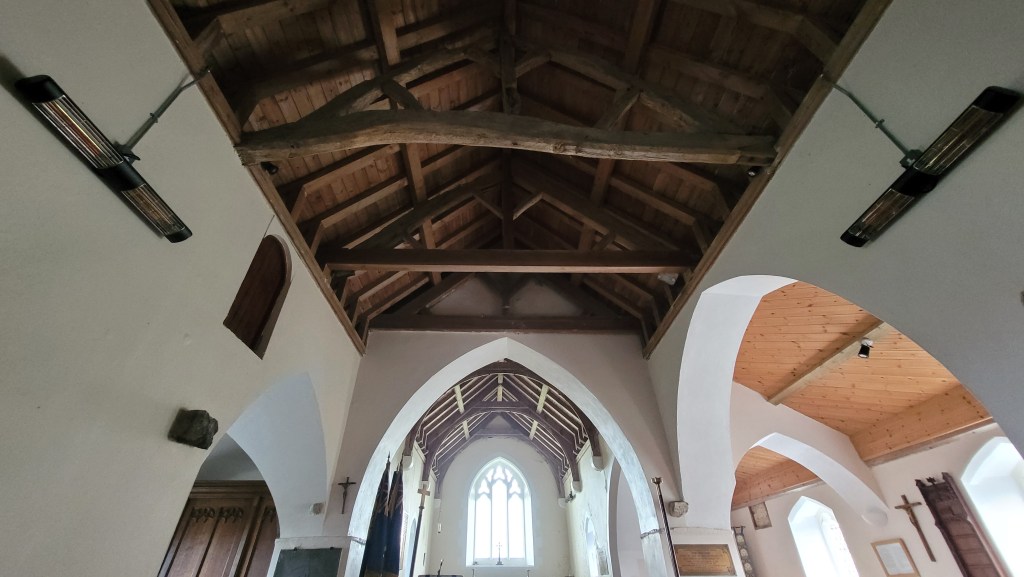
..”The church has many features of great historic interest. In the porch is a ‘lepers squint’, through which the unfortunate sufferers could view the elevation of the Host at the High Altar. Prior to the restoration of 1881, the church had been derelict for some years; the stone (Norman) font had been placed for safekeeping in a nearby cottage. The church once had a rood-loft; today, only the supporting corbels protruding from the wall remain. On one of the 15th century roof-beams, the face of a tonsured monk has been carved in high relief. Note also the vaulted ceiling. Two piscinae were discovered during restoration work: one, a plain, circular bowl, is in the south wall of the chancel while the other is in the south transept (originally a chantry chapel).
On the window sill near the font is a fragment of a medieval stone showing a bishop administering a blessing and holding a staff; it may have been part of an ancient churchyard cross. Another stone fragment of the same date can be seen on the first window-sill in the south wall. In the chancel is a case containing a copy of the Welsh ‘Parry’ Bible (1620).
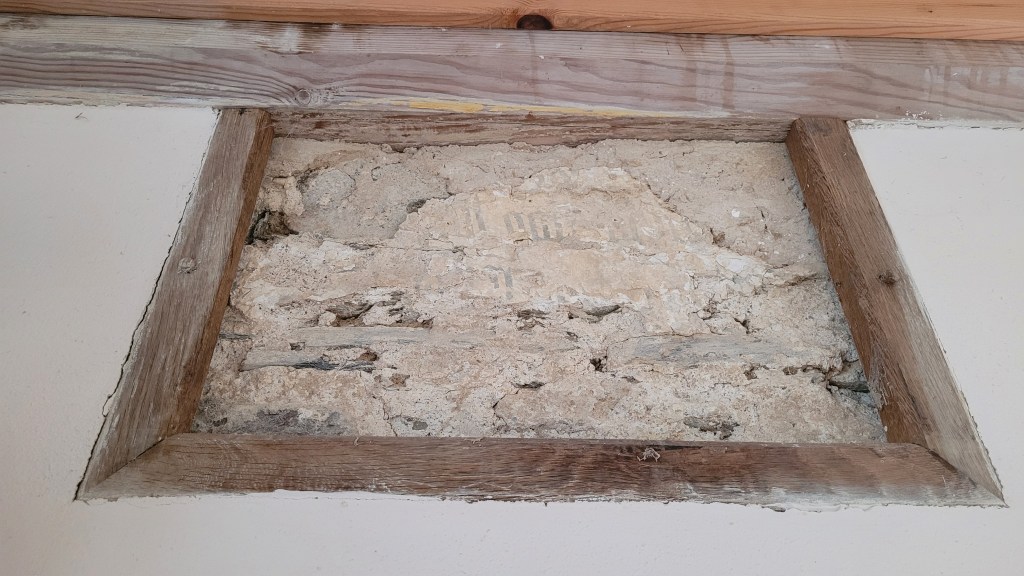
No fewer than six 7th-9th century Christian marked stones were also discovered in 1881; five of them are set into the exterior walls of the church. Once part of larger structures, they were carved by stonemasons working under monastic patronage. The most fascinating of these is set into the east end of the south transept. It shows a rudely incised face surrounded by four parallel lines beneath the cross of St Andrew; the face may be that of a female, a monk or Christ-as-Pantocrator.
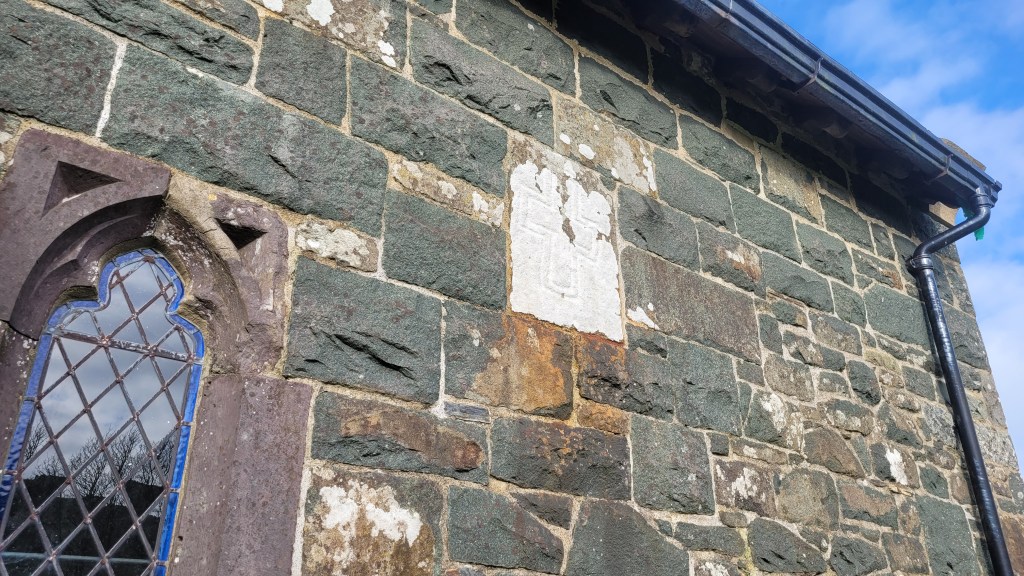
High in the south wall is a stone marked with a double-outline cross and another in the east wall of the chancel is decorated with a Latin cross. A fourth stone in the north wall displays a double Latin cross enclosed by a rounded outline, and low in the south wall to the west of the porch is a stone of later date (probably 10th century) with a moulded cross. The base of a decorated cross lies on the north west side of the churchyard.” –
https://archive.org/details/saintsstonesguid0000davi/page/n3/mode/2up?q=gwyndaf
Nearby the church is also the holy well.
Here is the video we made covering the history and legends of this village and church, as well as nearby neolithic cromlechs:
 CoralJackz - That History Couple
Leave a comment