
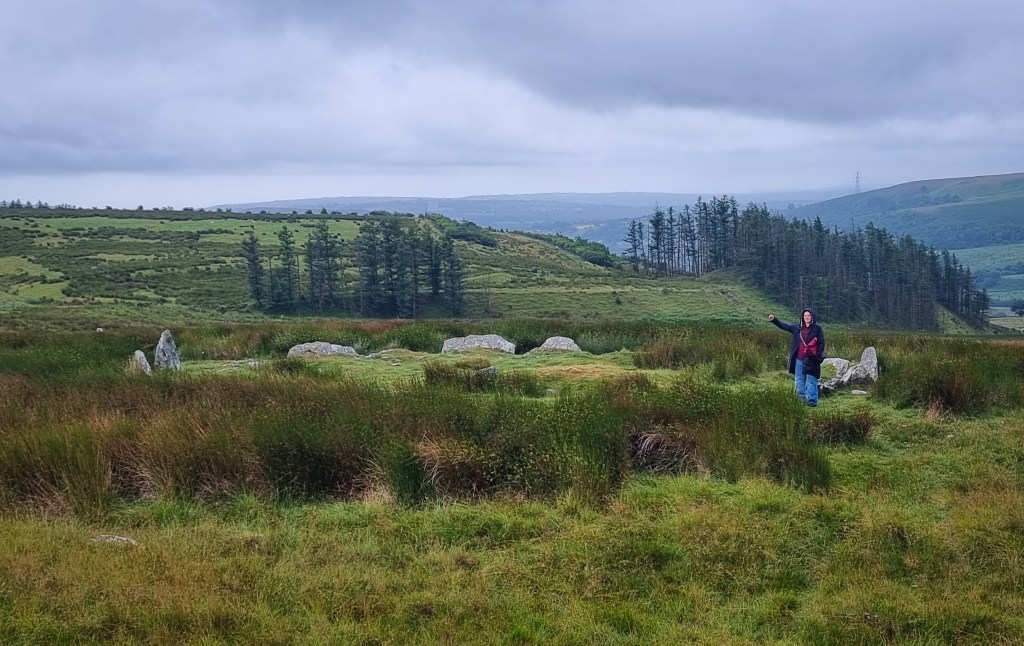

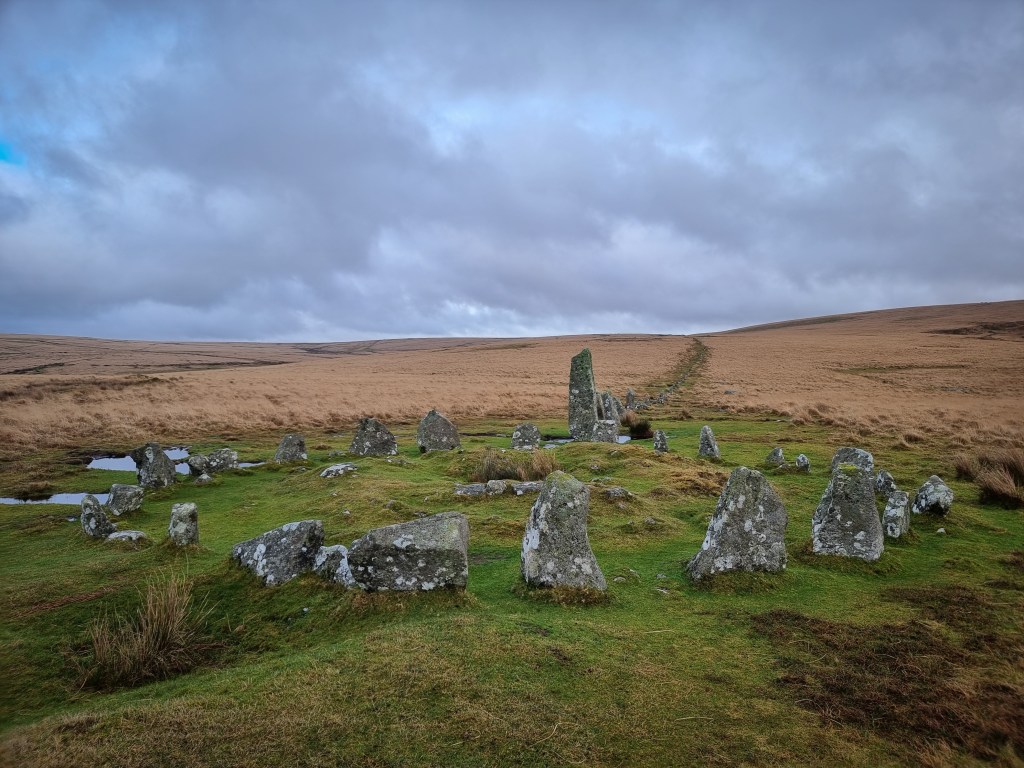
Carn Llechart Bronze Age Ring Cairn in Neath Port Talbot, Wales.
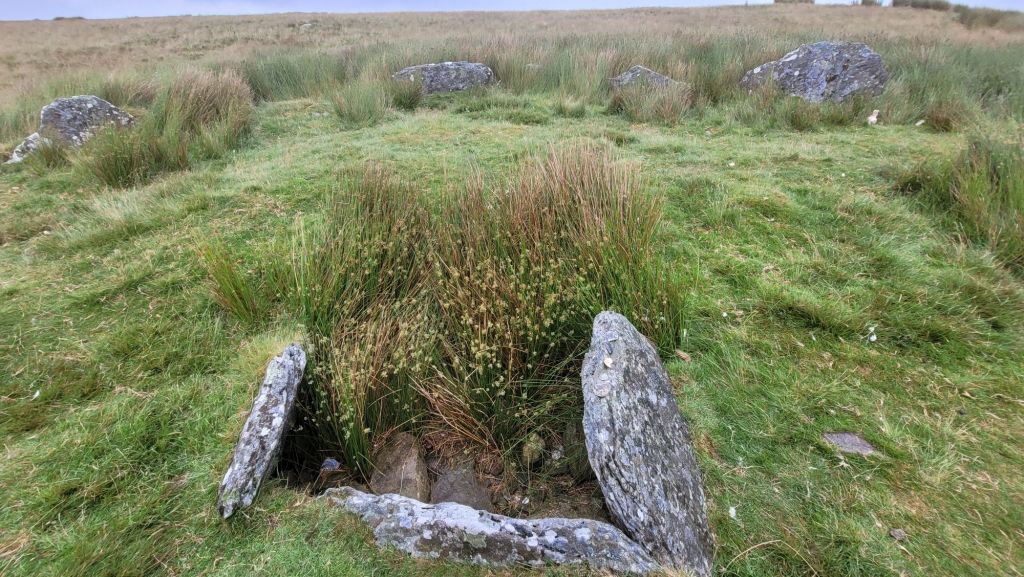
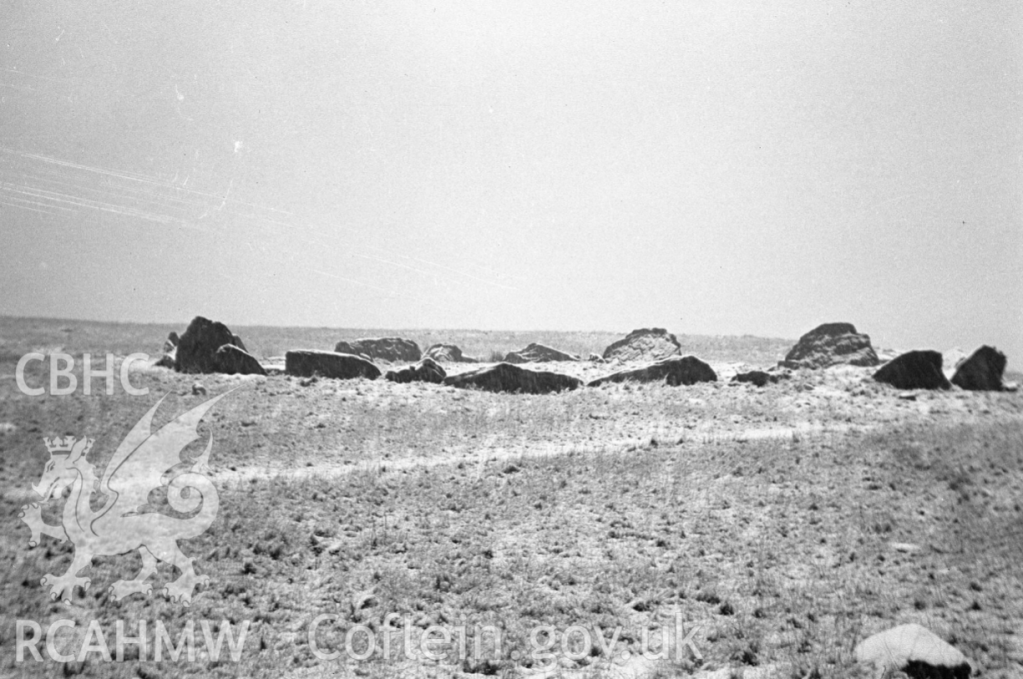
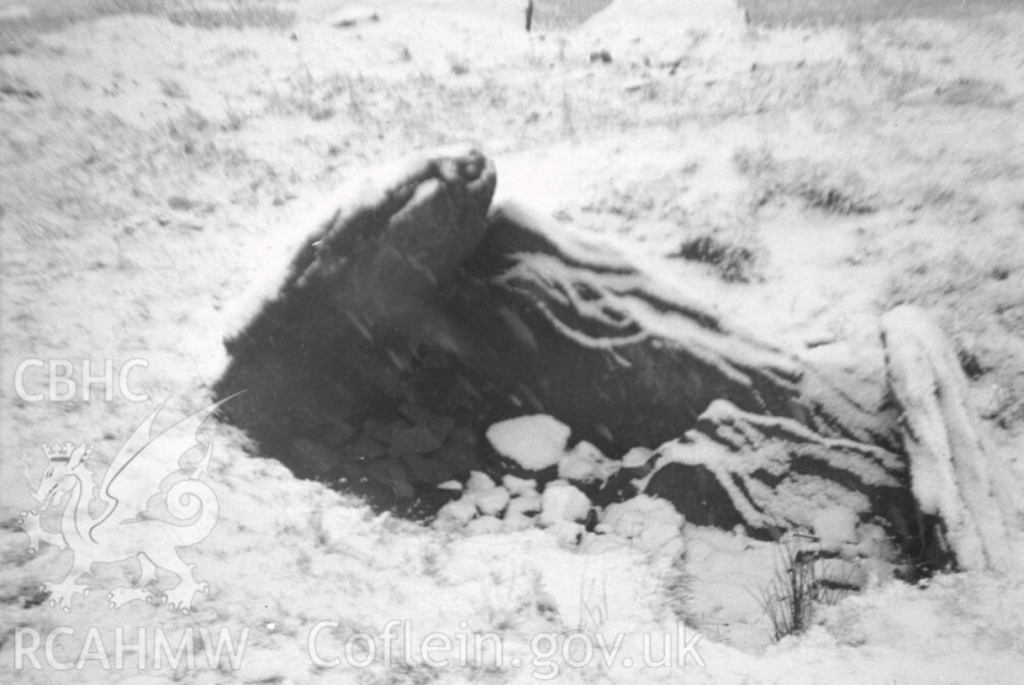
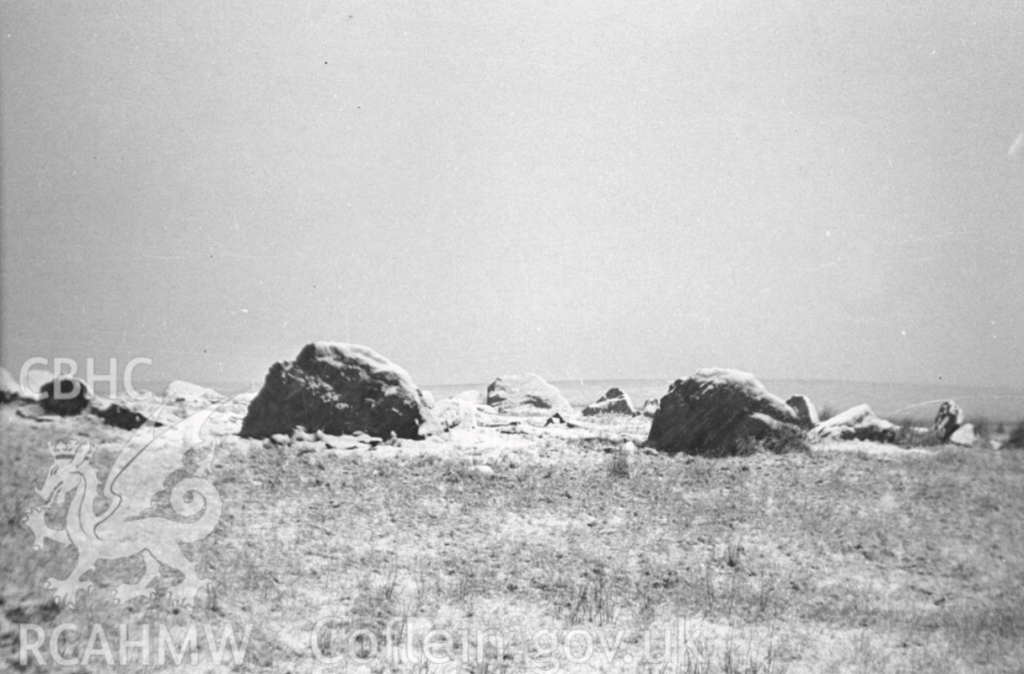
What remains here today is a circle of stones with a cist or kistvaen in the middle, of which the capstone is missing.
Earliest account we could find is from William Camden’s Britannia (1695 edition):
“on a mountain called Mynydd Gellionnen in the parish of Llangyfelach, I observed a monument which stood lately in the midst of a small cairn or heap of stones, but is now thrown down and broken in three or four pieces; differing from all I have seen elsewhere. ‘Twas a flat stone, about three inches thick, two foot broad at bottom, and about five in height. The top of it is formed as round as a wheel, and thence to the basis it becomes gradually broader. On one side it is carved with some art, but much more labour. The round head is adorned with a kind of flourishing cross, like a garden-knot: below that there is a man’s face and hands on each side; and thence almost to the bottom, neat fretwork; beneath which there are two feet, but as rude and ill-proportioned (as are also the face and hands) as some Egyptian hieroglyphic. *We would love to find out which stone he is talking of here, and if it still survives*
not far from hence, within the same parish, is Carn Llechart, A monument that gives denomination to the mountain on which it is erected. ‘Tis a circle of rude stones, which are somewhat of a flat form, such as we call llecheu, disorderly pitched in the ground, of about 17 or 18 yards diameter; the highest of which now standing is not above a yard in height. It has but one entry into it, which is about four foot wide: and in the center of the area, it has such a cell or hut, as is seen in several places of Wales, and called cist vaen: one of which is described in Brecknockshire, by the name of St. Iltut’s Cell. This at Carn Llechart is about six foot in length, and four wide, and has no top-stone now for a cover; but a very large one lies by, which seems to have slipped off. Y Gist Vaen on a mountain called Mynydd Drumau by Neath, seems to have been also a monument of this kind, but much less; and to differ from it, in that the circle about it was mason-work, as I was informed by a gentleman who had often seen it whilst it stood; for at present there’s nothing of it remaining. But these kind of monuments, which some ascribe to the Danes, and others suppose to have been erected by the Britons before the Roman Conquest, we shall have occasion to speak of more fully hereafter.” – https://www.exclassics.com/camden/camden0084.htm
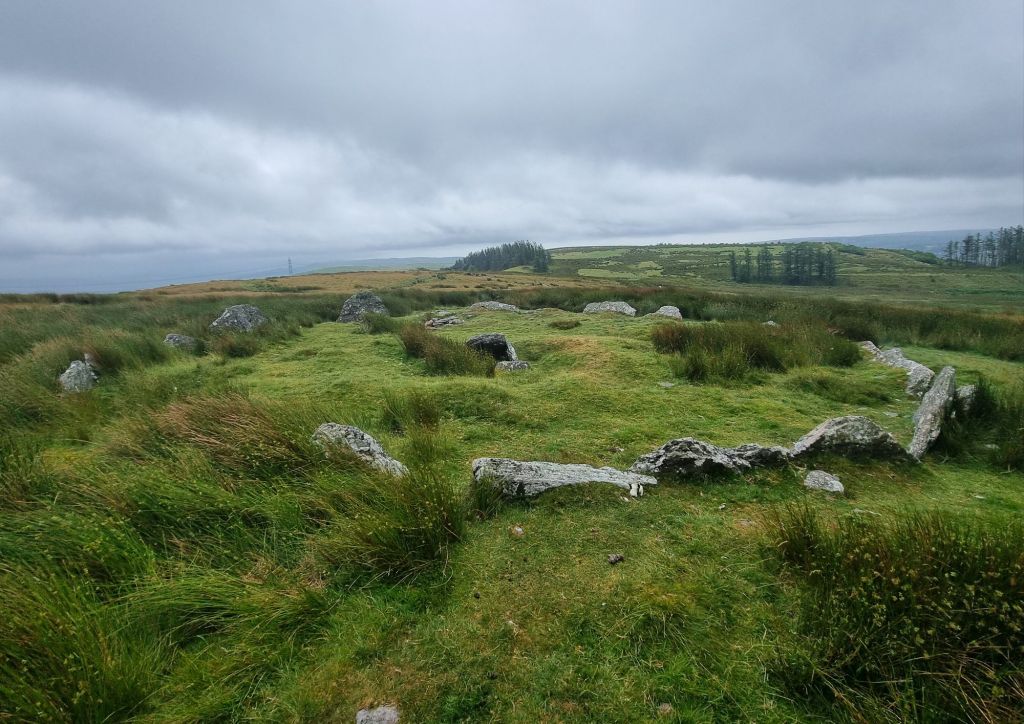
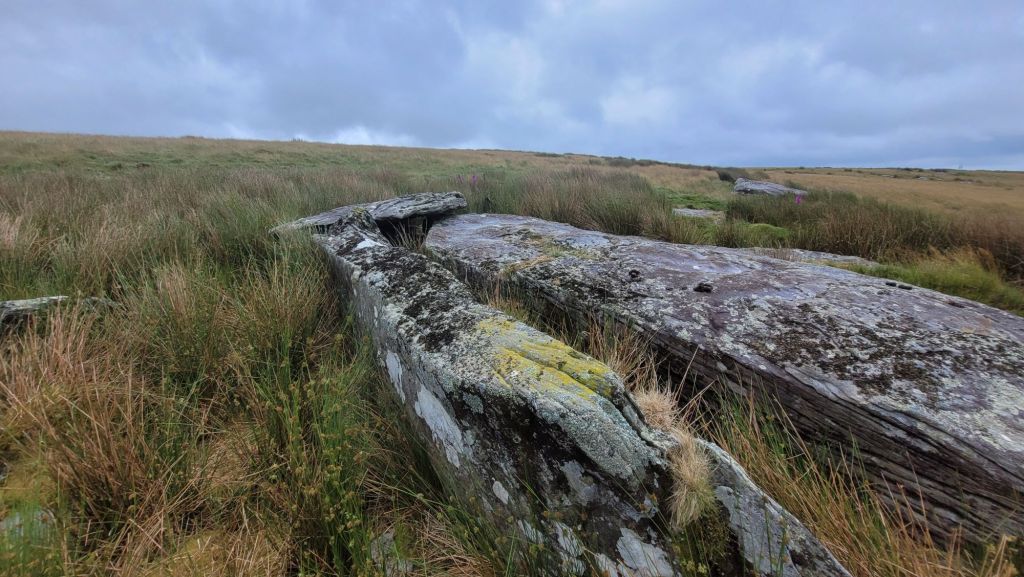
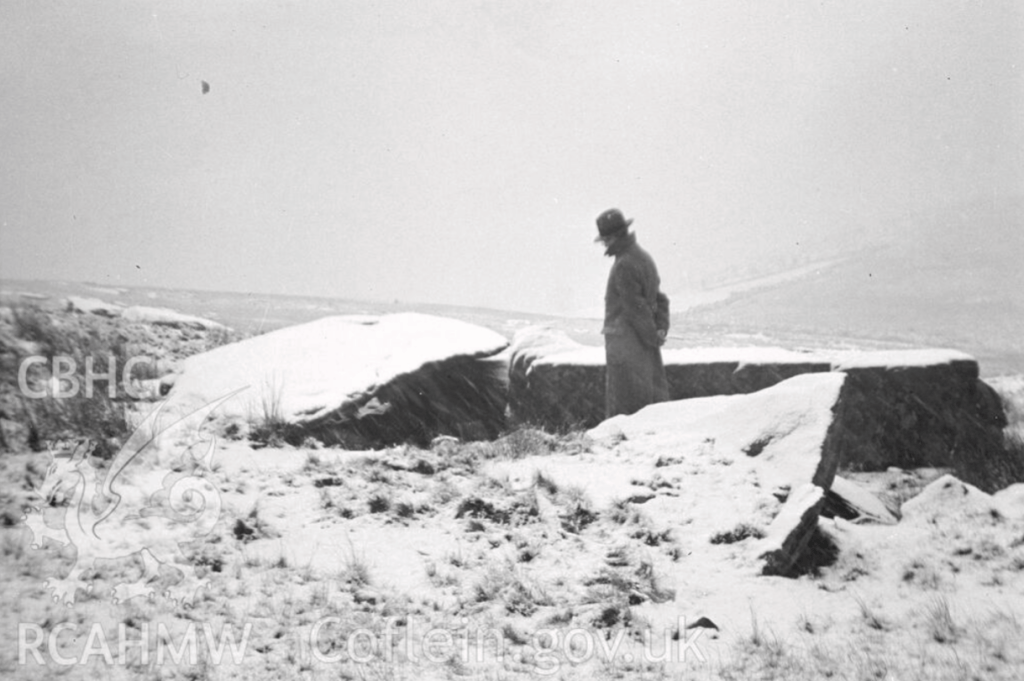
Next to the site is also a heavily disturbed Neolithic ‘burial chamber’.
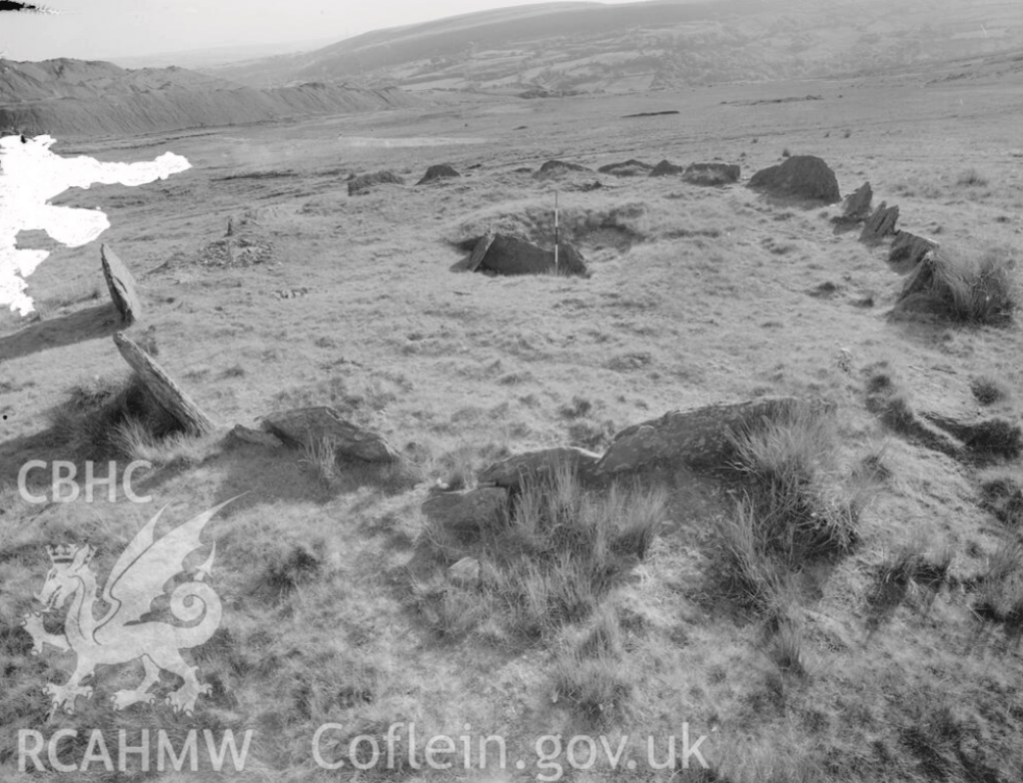
Coflein provides some old photos:
https://coflein.gov.uk/en/site/301285/images
Accessing the site:
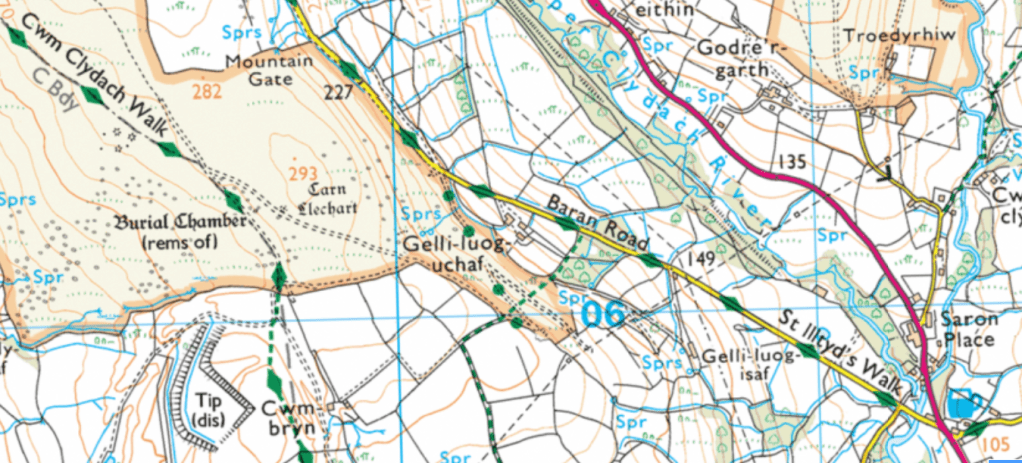
We found it to be fairly easy to find. However, some people say they struggled to locate it.
From Swansea, turn left at traffic lights in Pontardawe to Rhyd-y-fro.
Turn left just after the Travellers Well pub, on minor road to Ammanford.
Continue for 1 mile to cattle grid.
Immediately after, take very sharp left-hand bend.
Continue upwards for 0.5 miles to quarry and park near yellow grit bin.
 CoralJackz - That History Couple
Leave a comment