
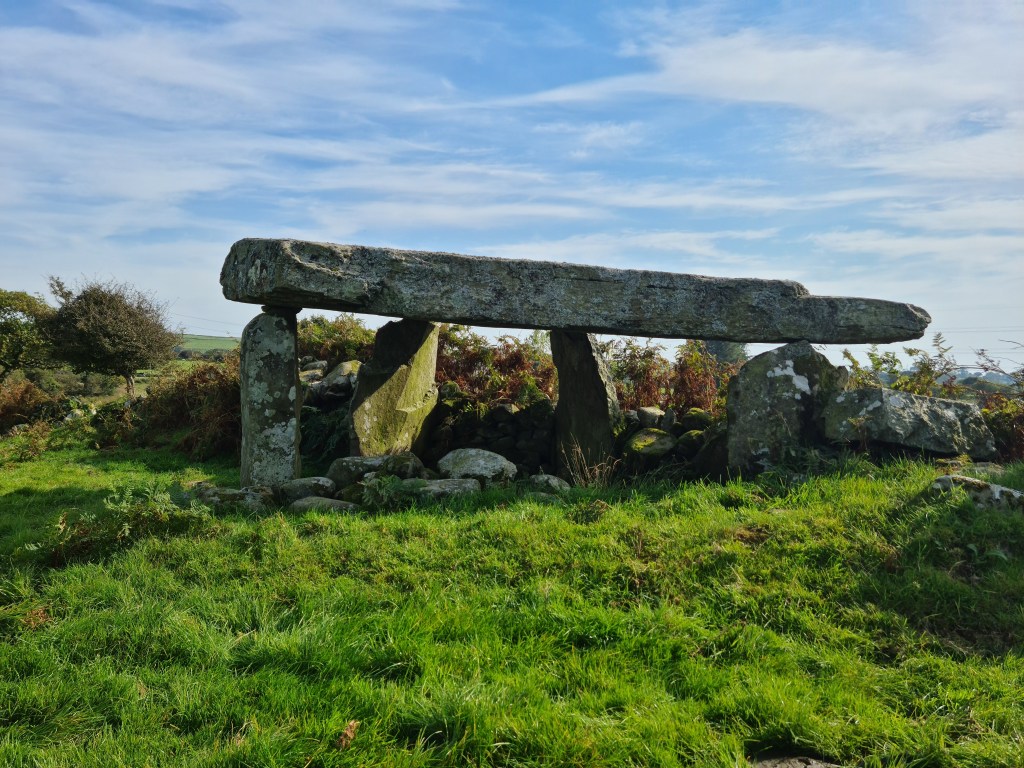

Neolithic site near Criccieth – Gwynedd, Wales.
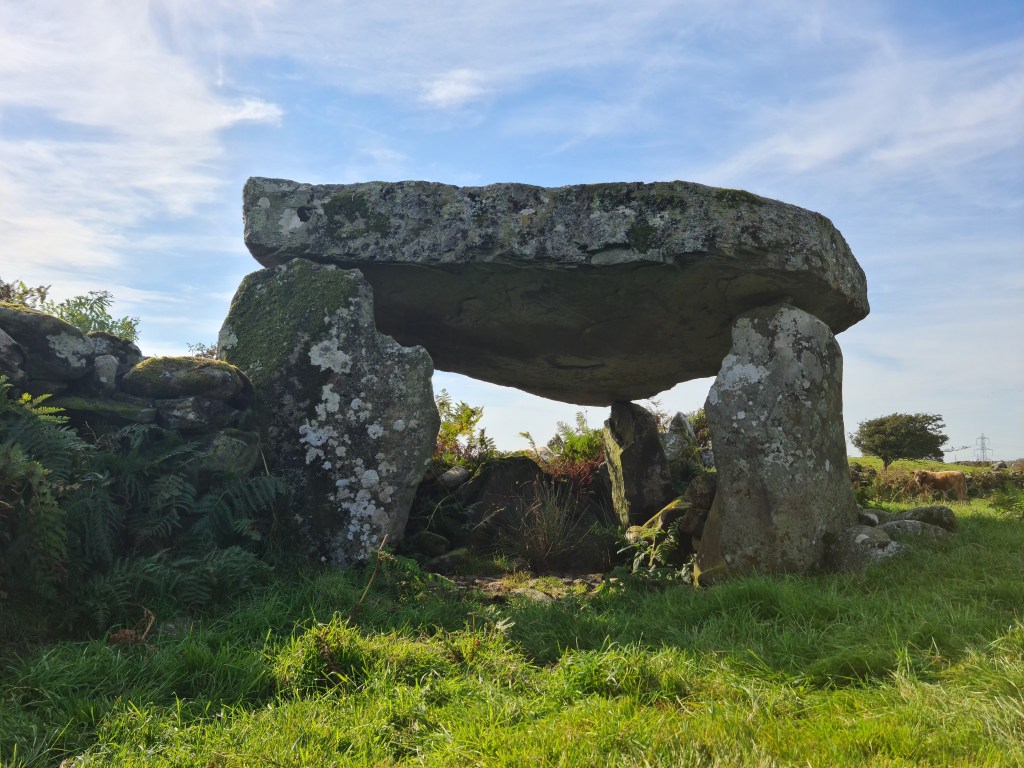
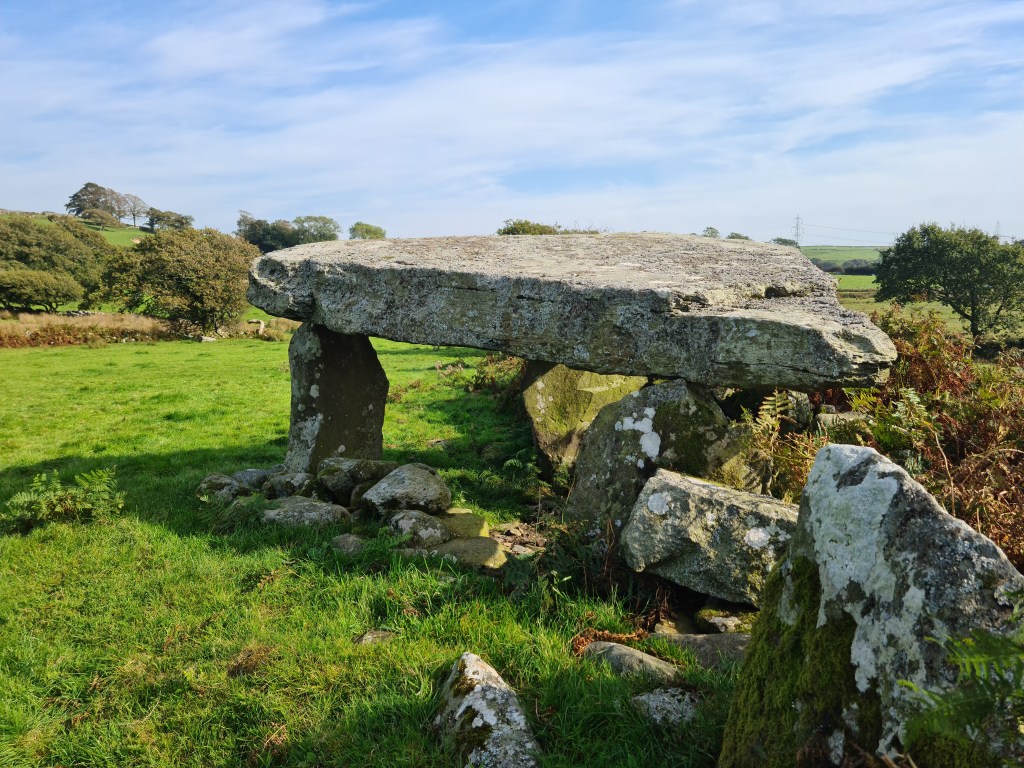
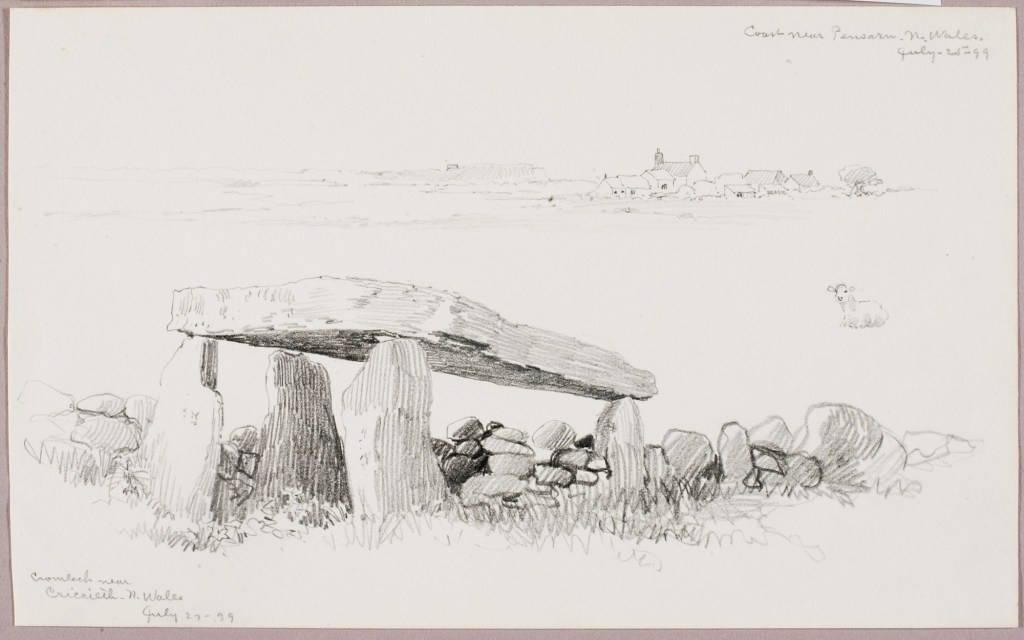
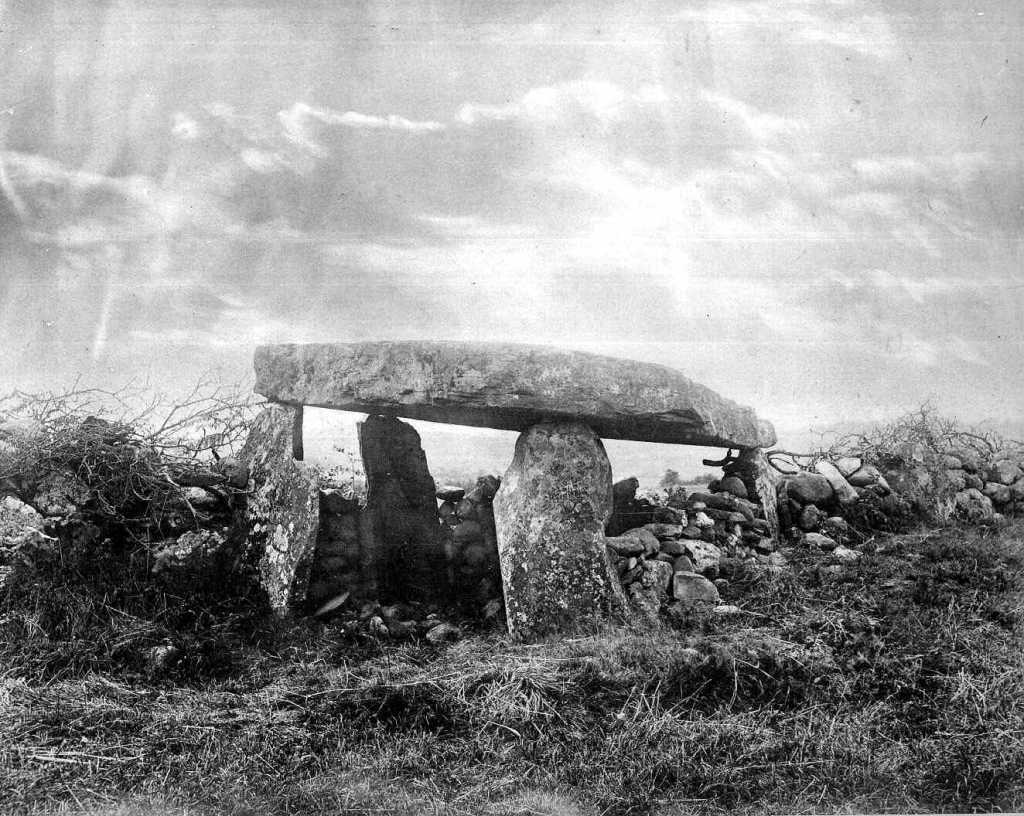
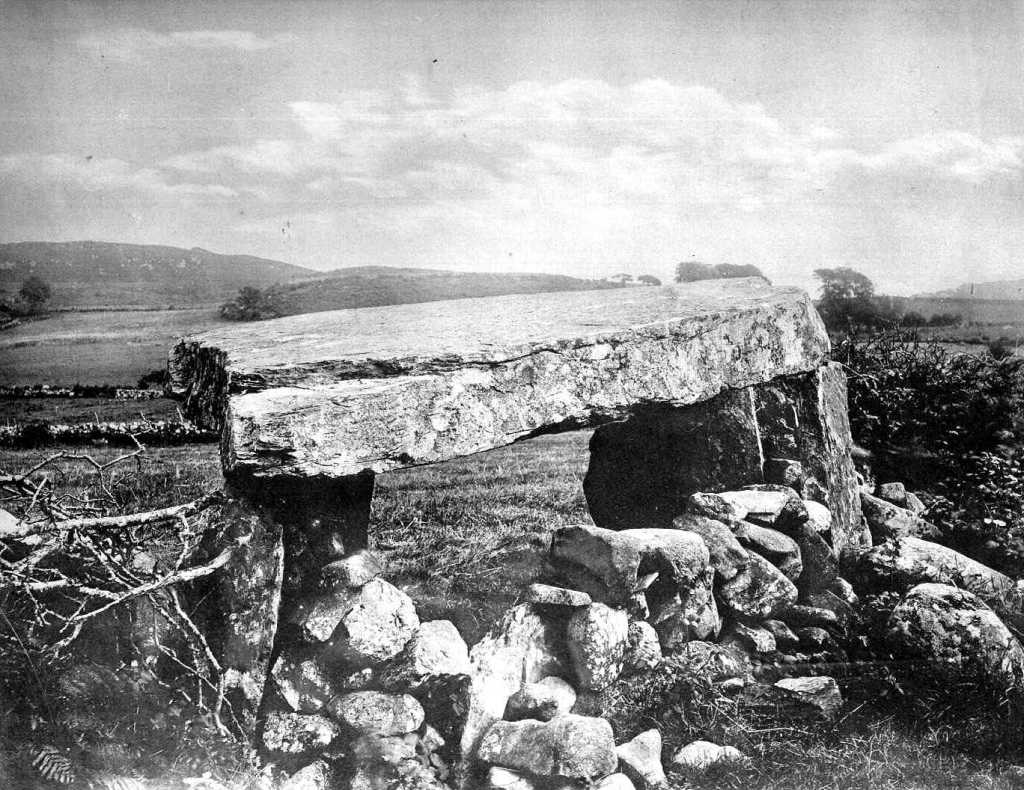
Today it is an impressive monument with four large uprights supporting a single huge capstone, but it hasn’t always looked like this… Back in the 1700’s there were around 13 uprights, and 3 capstones, forming a much larger and more complex structure. But by 1816, the two smaller capstones and their respective uprights had been toppled or removed… and in 1863, the very capstone we see today was also toppled, when a farmer attempted to remove another upright, to be used as a lintel in a modern building. It is not recorded who, how or when the capstone was lifted and a fallen supporter re-erected, but the repairs must have been done sometime between 1869, and 1900 when it was first photographed…looking very similar to how it does today.
The earliest image available of the site is a drawing from 1769 by Farrington:
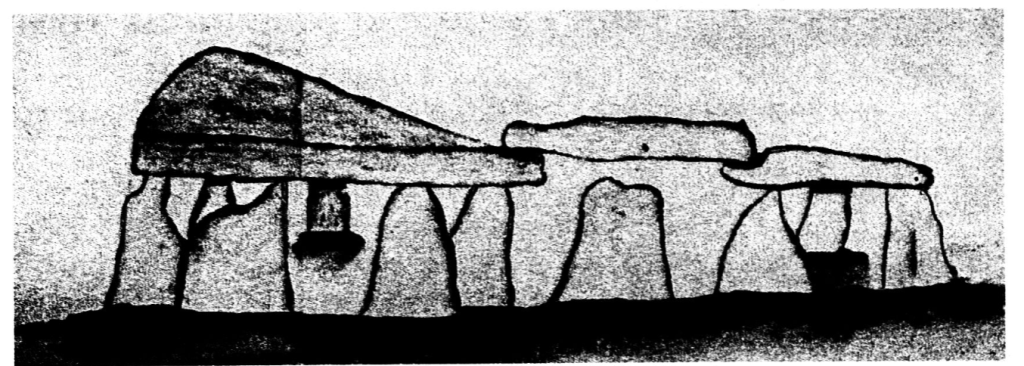
The following is quoted from Barnwell, in Archaeologia Cambrensis Third Series No. LVIII April 1869:
“Not far from Criccieth, near Ystum Cegid, are the last remains of what must have been, in Pennants time, an interesting group of cromlechs “joining to each other”. If by these words he meant that they actually touched each other, the tumulus that enclosed them must have been of gigantic proportions. Gigantic as it was, it had so completely disappeared in Pennants time that he does not even appear to have suspected its existence. He merely speaks of the three structures as probably “memorials of three chieftains slain on the spot”. Of these cromlechs, however, two have entirely vanished ; and the remains of the third are small and insignificant, consisting of what have been four supporters of very moderate dimentions, and the capstone, of a triangular form ; its greatest length being between fourteen and fifteen feet, and its greatest breadth twelve and a half.. [cont]
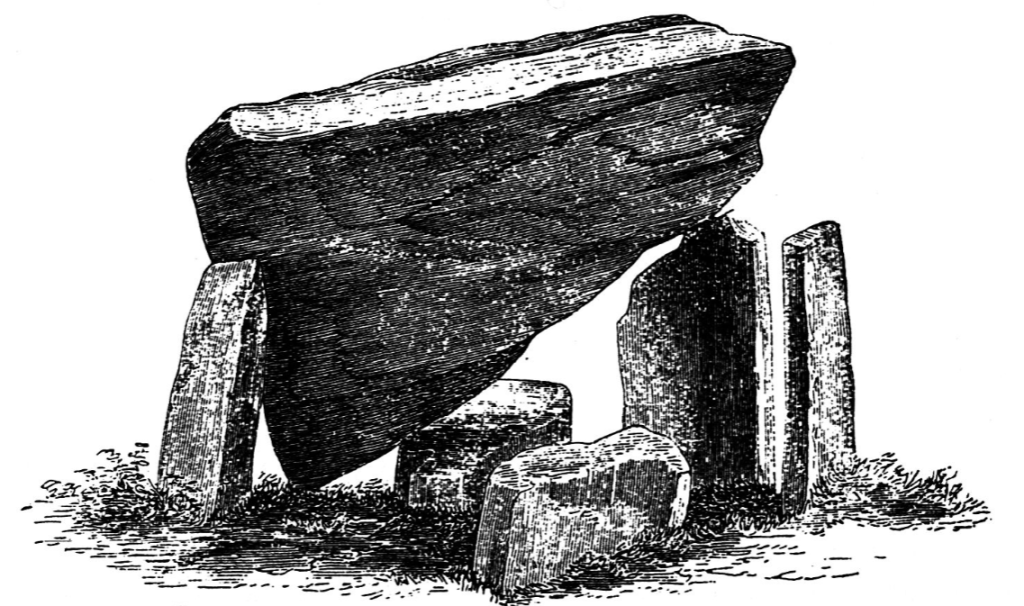
..its thickness, however, has not the usual proportion, being unusually thin and slight. It is only very lately that this covering slab was dislodged from its original position by some masons who had taken a fancy to one of the supporters for some building purpose ; and it is very probable, unless proper precaution is taken, that what still remains of this triple group will vanish, and not leave even a trace of itself. The removal, however, of two of the three must have taken place some fifty years ago, and not long after Pennant’s visit, for Pugh, in his Cambria Depicta, in the early part of the present century, drew the monument as he found it, and as is here given from his drawing.. [cont]
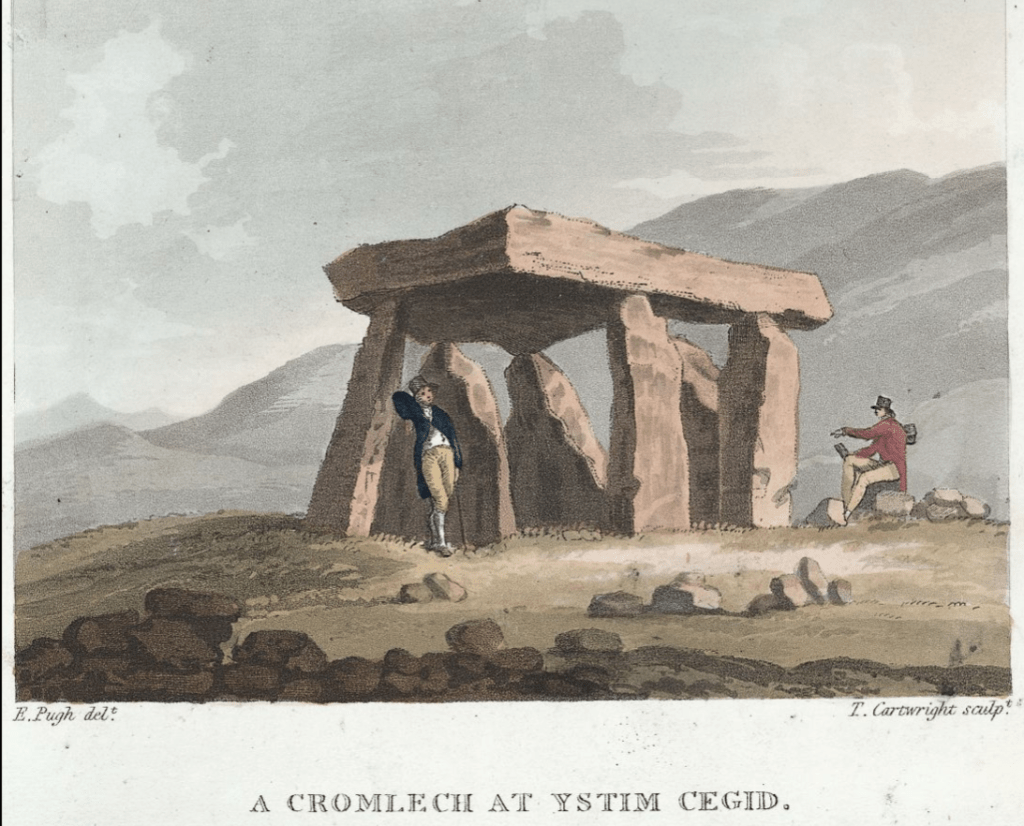
..from this it will be seen that it was tolerably perfect when he saw it, except that, unless the intervals between the uprights had been originally filled up with rubble, some of the uprights must have been wanting. It was, however, at that time used as a cow-house by the farmer, and the vacant spaces were then filled up with walling, but most probably by the farmer himself. The three present remains, exclusive of the capstone, are three upright supporters, one lying under the cover, and another in the ditch. The tallest of the upright ones is 5ft 6ins, and the prostrate one 6ft 9ins. The chamber originally was about 10ft by 9. A considerable number of small stones are amassed around it ; but whether merely collected there to be out of the way, or the remains of the original carn, is uncertain. In the present mutilated state it is not east to determine what the direction of the chamber was. The entrance, however, could not have been on the south or west side ; and although it may have been on the north side, it appears to have been on the usual side, namely the east. It is only known by the peasants as Coetan Arthur ; and if questioned, they appear to have never heard of a Cromlech or a Druids Alter. Not is this ignorance confined to this particular district, for it appears to exist in most other parts of Wales.” – https://journals.library.wales/view/2919943/2998546/49#?xywh=-190%2C-337%2C2612%2C2716
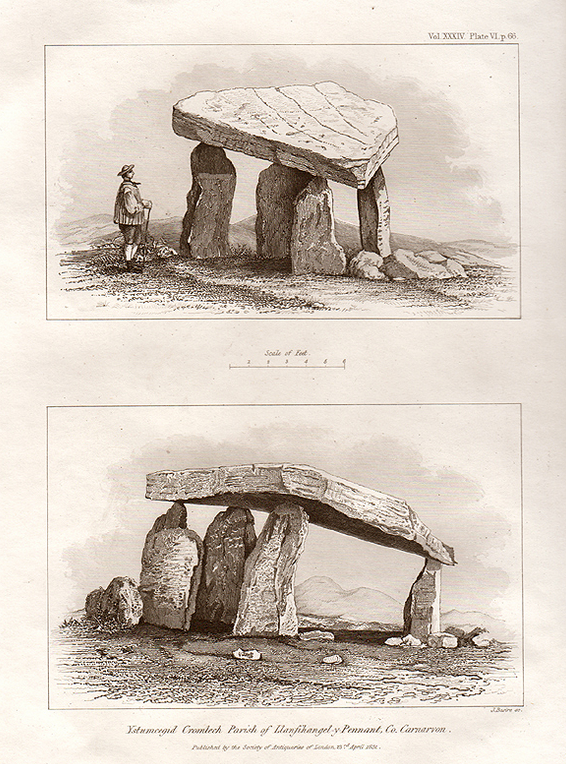
The following is quoted from Arch. Camb. Vol.XV 1869:
“Formerly there were three Cromlechs adjoining each other here, but at present there is only one remaining, and this, I have been told, would have followed the others, if it had not been brought to the notice of Lord Harlech, the present landlord, who just rescued it in time. It is now in a line with a stone wall, with its capstone lying on four supports, varying from five feet and a half to six feet and a half high. The interstices were formerly filled to the top with dry masonry, and the chamber used as a shelter for cattle, but the walling has now partly fallen away, and the use of it for that purpose has been, for the present, discontinued. The chamber, originally, was about ten feet by nine feet. The capstone is of a triangular form, its greatest length being between fourteen and fifteen feet, and its greatest breadth about twelve and a half feet. It lies in a field north-west of Ystymcegid Farm, about three miles east of Criccieth.”
In 1999, renowned archaeologist Frances Lynch published a paper in the Archaeologia Cambrensis titled ‘A fresh look at Ystum Cegid Isaf Megalithic Tomb”. Despite being around 25 years old now, it’s probably one of the most up to date and comprehensive documents we’ve come across for any Cromlech… Partly because there have been no recent developments at this site, but most importantly, Lynch has collated historical references to to this monument, neatly presenting them alongside their descriptions and diagrams. To read the full report – https://journals.library.wales/view/4718179/4752816/215#?xywh=-1065%2C1386%2C4410%2C2272
Legends:
Ystum Cegid Isaf is said to be an abode of the fairies – as a farmer that lived directly nearby happened to make one his wife. John Rhys relates a story about in his Celtic Folklore Welsh And Manx:
“I walked across to Criccieth Station; but on my way I was directed to call at a farm house called Llwyn y Mafon Uchaf, where I was to see Mr. Edward Llewelyn, a bachelor then seventy-six years of age. He is a native of the neighbourhood, and has always lived in it; moreover, he has now been for some time blind. He had heard a good many fairy tales. .. He told me of a man at Ystum Cegid, a farm not far off, having married a fairy wife on condition that he was not to touch her with any kind of iron on pain of her leaving him for ever. Then came the usual accident in catching a horse in order to go to a fair at Carnarvon, and the immediate disappearance of the wife. At this point Mr. Llewelyn’s sister interposed to the effect that the wife did once return and address her husband in the rhyme, “Os bydd anwyd arfy mab“, etc. Then Mrs. Llewelyn enumerated several people who are of this family, among others a girl, who is, according to him, exactly like the Fairies.” – https://britishfolklore.com/ystumcegid/
The following is from Wikipedia:
From WIKI:
“Ystum Cegid Farm:
Plasdy bychan yn Eifionydd, Gwynedd yw Ystumcegid, a fu’n amlwg ym mywyd cymdeithasol a diwylliannol y fro. Mae’n ffermdy heddiw.
Saif ar fryncyn ger Dolbenmaen. Yn yr Oesoedd Canol a chyfnod y Tuduriaid bu aelwyd Ystumcegid yn gyrchfan i’r beirdd. Ymhlith y beirdd a ganodd i’r teulu yr oedd Llywelyn ab y Moel. Dyma ei ddisgrifiad o’r plasdy ar ddechrau’r 15g:
Ystum wen, blas dinam waith,
Cegid, nid beudy coegwaith.
Neuadd fawr newydd furwen
Uwch ael ffordd, uchel ei phen.
Google Translate:
Ystumcegid is a small mansion in Eifionydd, Gwynedd, which was prominent in the social and cultural life of the area. It is a farmhouse today.
It stands on a hill near Dolbenmaen. In the Middle Ages and the Tudor era, Ystumcegid’s hearth was a destination for poets. Among the poets who sang for the family was Llywelyn ab y Moel. Here is his description of the mansion at the beginning of the 15th century:
White gesture, dynamic flavor of work,
A hemlock, not a barnyard.
Furwen’s new large hall
High brow way, high head.”
Here is the video we made exploring Ystum Cegid Isaf –
 CoralJackz - That History Couple
Leave a comment