
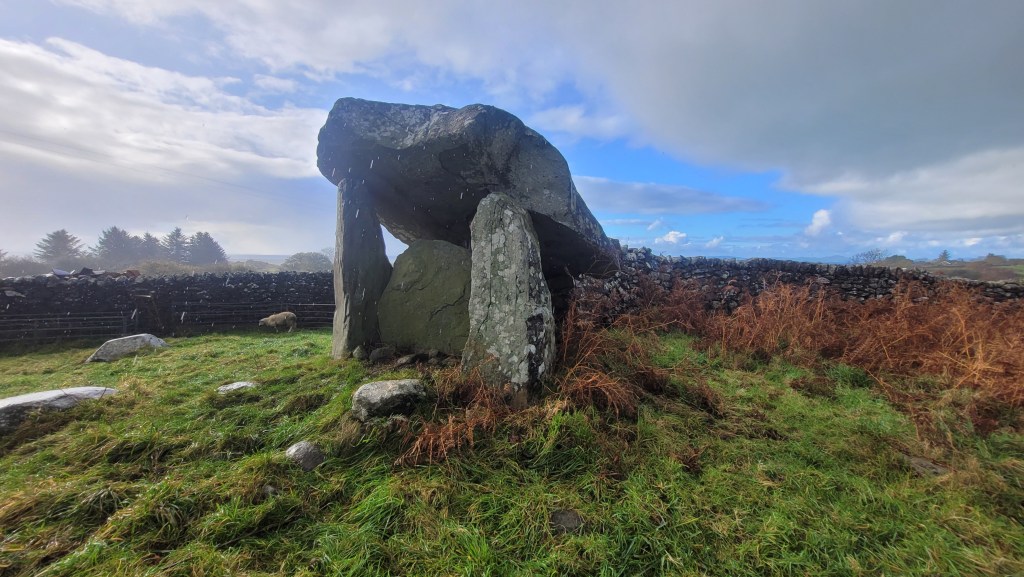

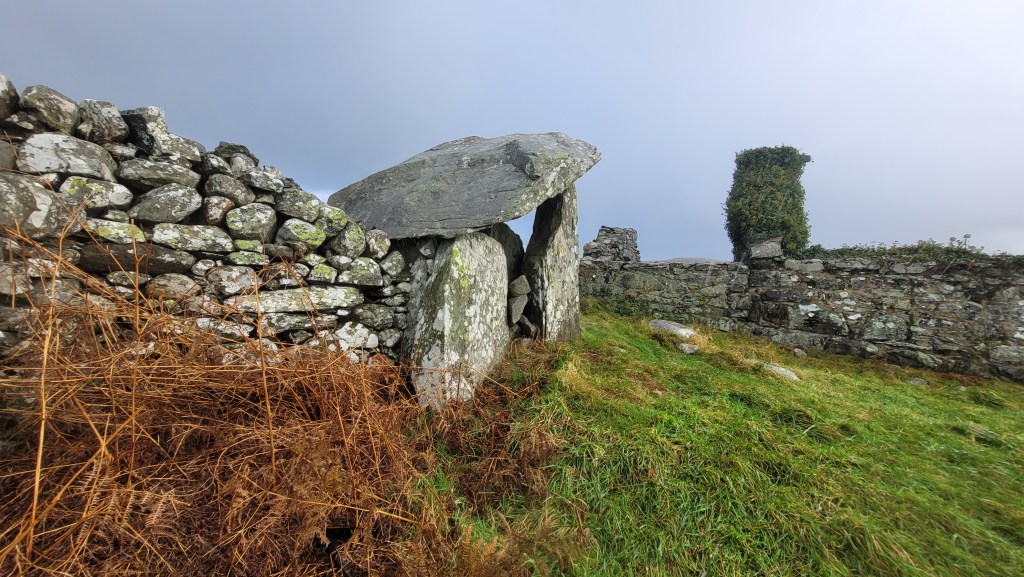
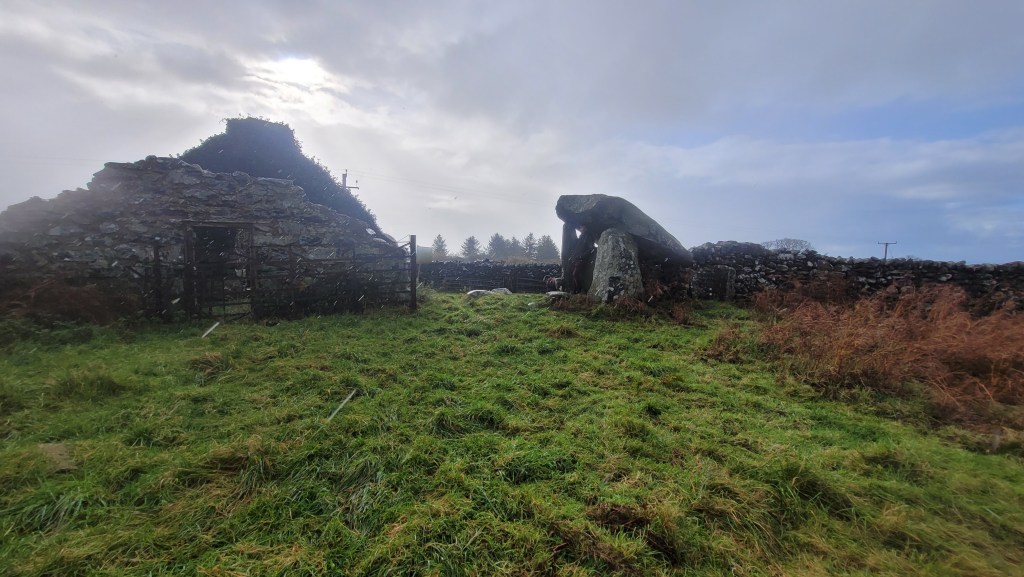
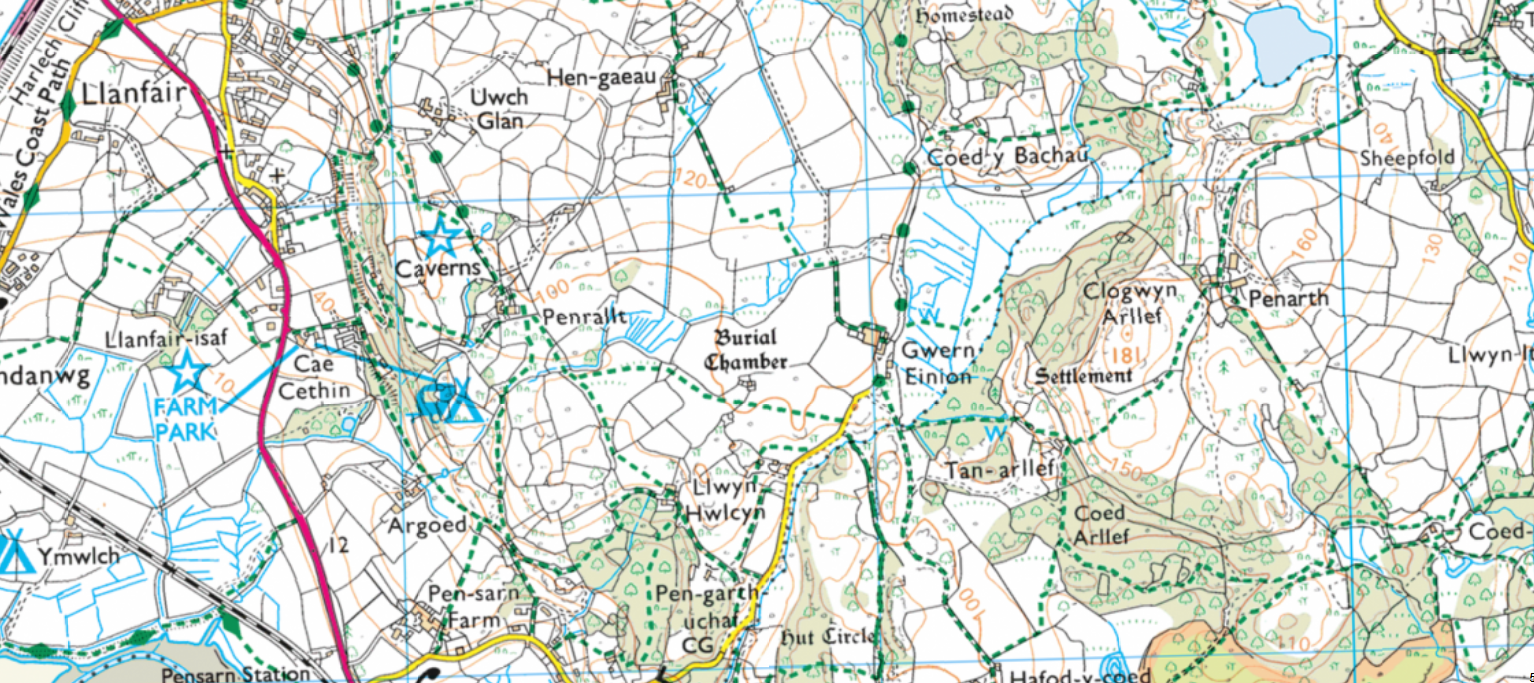
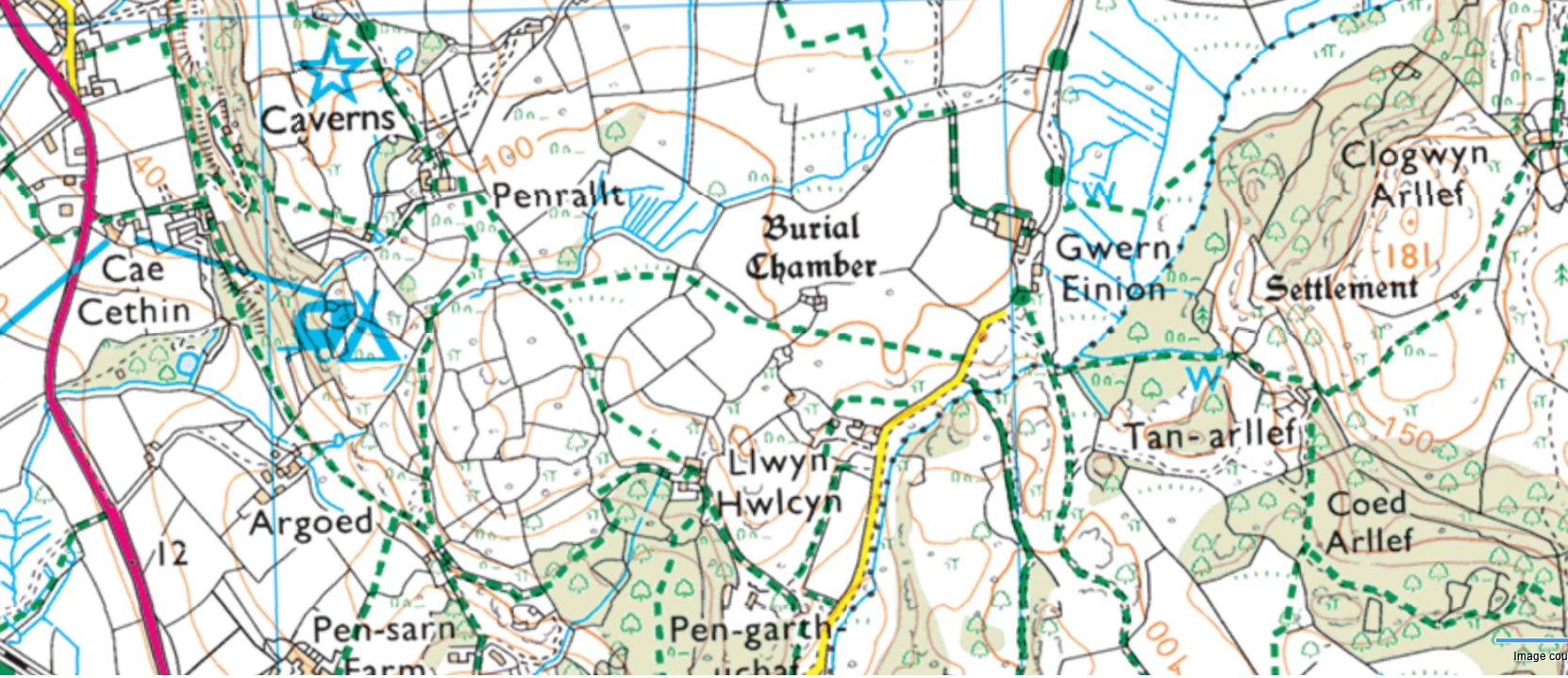
Neolithic cromlech/dolmen in Gwynedd, Wales. This monument was at some point incorporated into a wall next to a now ruined farmstead and wasbeen reported as being used as a pigsty.
In the book named “An Inventory of The Ancient Monuments in Wales and Monmouthshire”, published in 1921, the author writes: “This cromlech occupies a site about 300 yards west of the farmstead of Gwern Einion. It adjoins a beast-house on the east, and is in the line of a wall on the west, its long axis being east and west. The capstone, a fine block about 9 feet long by 4 feet broad and about 1 foot thick, rests only upon three supporters and is now tilted from east to west. The tallest supporting stone measures 7 feet 3 inches high. There are other uprights which shut off the chamber, and a large stone 5 feet in length which may also have served the same purpose is now built into the wall close at hand. Some low walling has been put up the better to adapt the structure to its present use as a pigstye.”
Coflein description of the site:
“Gwern Einion burial chamber is a fine, dramatic example of a Neolithic portal dolmen with a capstone which slopes steeply up on its east side. Formerly incoporated in a stone field wall alongside a derelict barn, the tomb was recently cleared of modern stone and its prehistoric setting partly restored. The chambered tomb is polygonal, approximately 2.1m east-west by 1.75m north-south, with a well-defined ‘portal’ entrance with two prominent uprights and a third blocking stone defining the portal. The top edge of the sloping capstone rises 2.4m above the ground. Behind and to the west of the chamber is a further, rectangular upright stone 1.4m long by 1m high, presumably once a structural part of the tomb. The tomb stands in well-defined remnants of a stony cairn in the midst of a ruined farm building and its related enclosures. Similar to the better-known chambered tombs at Dyffryn Ardudwy to the south (NPRN 95422)” – https://coflein.gov.uk/en/site/302696
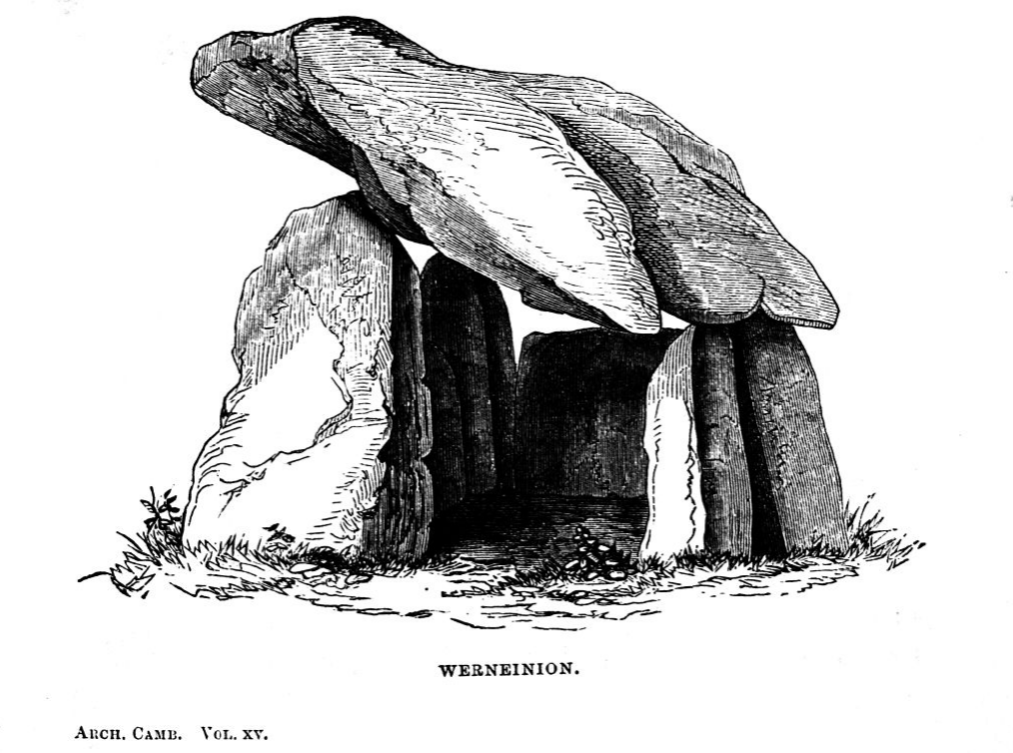
The following is quoted from Archaeologia Cambrensis 1869:
“In the parish of Llanfair, on a small farm called Gwern Einion, is another cromlech, of larger proportions than those already mentioned. It is, for a Welsh cromlech, in a tolerably perfect condition, and was lately used as a pigsty. There is a large quantity of stones heaped up around it, which may, perhaps, have been the remains of the carn ; but this is not quite certain, as the place might have been considered convenient to receive the stones when cleared off the land. (Cut No.6)
Not far from this spot is a remarkably fine maenhir, built in the middle of a high wall ; over which it towers, and presents a conspicuous mark against the setting sun. This stone, local authorities ay, was originally dedicated to the sun ; and when it was judged expedient to burn a human vitim in honour of that luminary, the unfortunate sufferer was secured by iron chains to the stone. The lower part of the stone is now embedded in the wall, so it is not easy to make out the traces of the fire ; which otherwise would, no doubt, be discovered, and believed by the peasants of the district. There is little doubt that many other monuments of the same character have once existed in this district, as here and there fragments of them may have found in the stone walls which divide the enclosures. There is also reason to suppose that most of the stones of which the carns were formed have found their way to the same destination, for the builders of these walls have ascertained by experience that the stones taken from such early remains, are much more suitable for their purpose than any others they can find. Whether this is exactly the case in this part of Merioneth, was not ascertained by personal inquiry ; but such, at least, is the acknowledged fact in the higher lands of Denbighshire.” –
https://journals.library.wales/view/2919943/2998546/41#?xywh=-1512%2C536%2C5202%2C2708&cv=41
Here is the video we made exploring Gwern Einion –
 CoralJackz - That History Couple
Leave a comment