
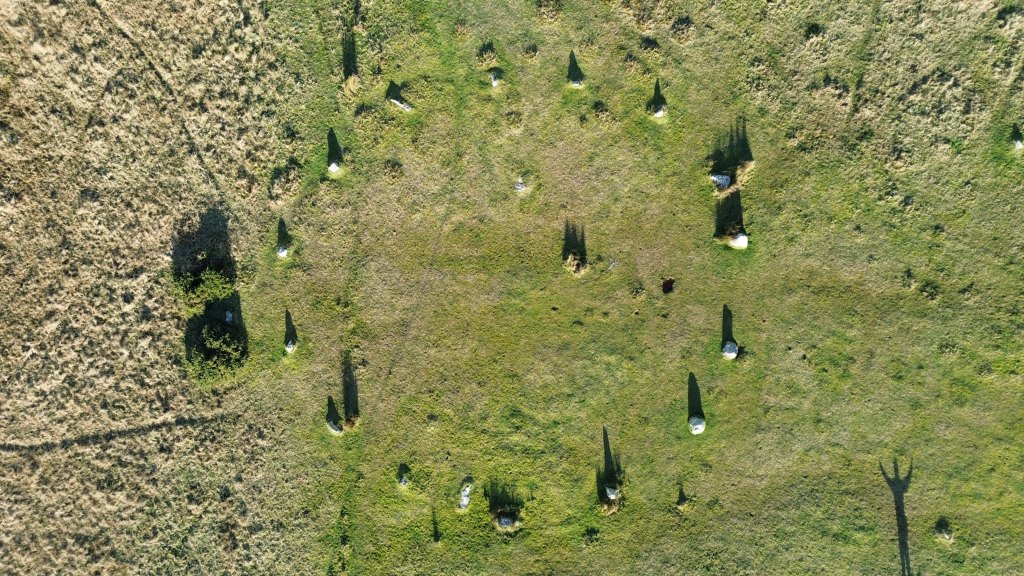

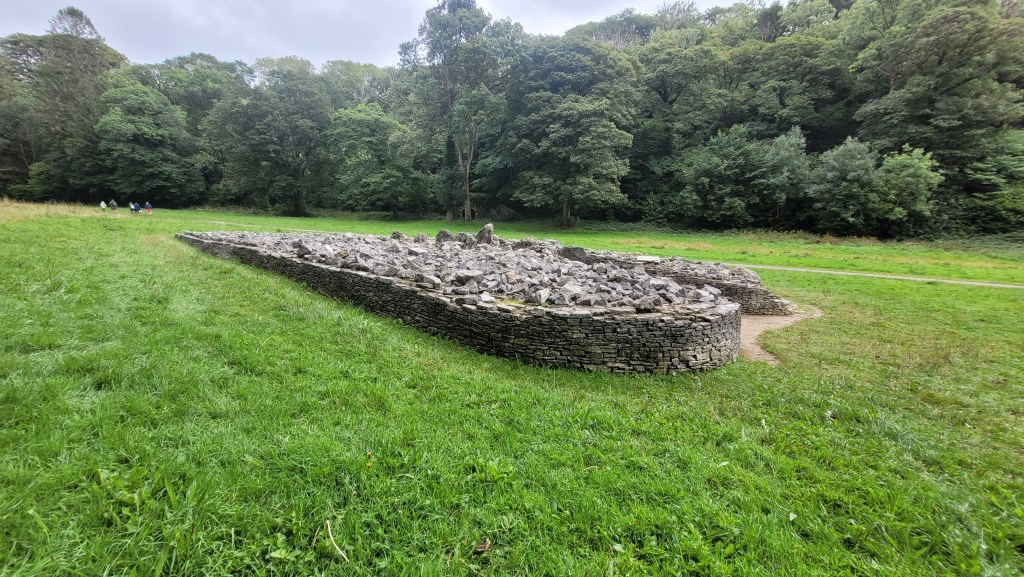
Gors Fawr Late Neolithic/Bronze Age Stone Circle – Pembrokeshire, Wales.
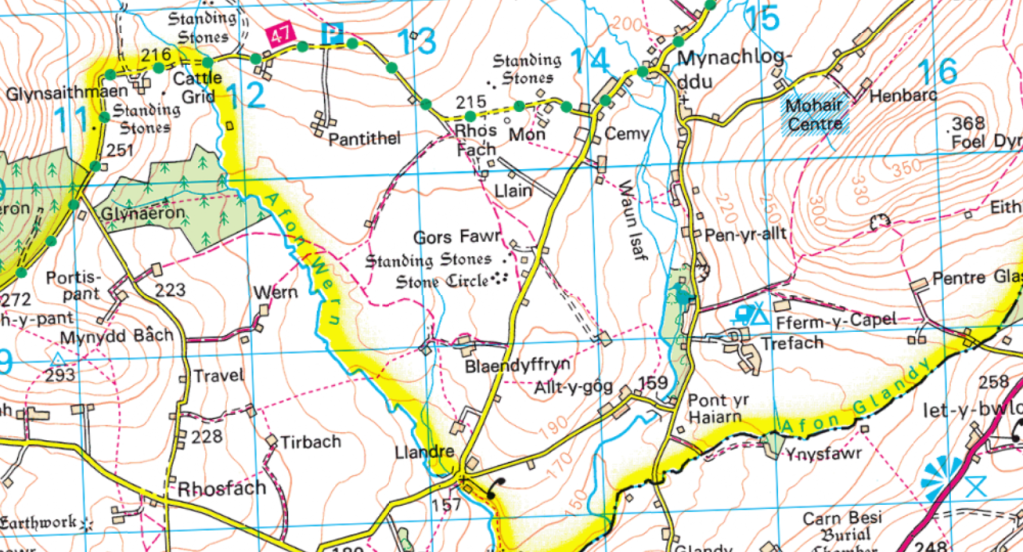
Within Mynachlog-ddu, nestled amongst the rolling Preseli hills, is the level common named Gors Fawr… meaning Great Marsh.. Where we find a humble, but significant stone circle.
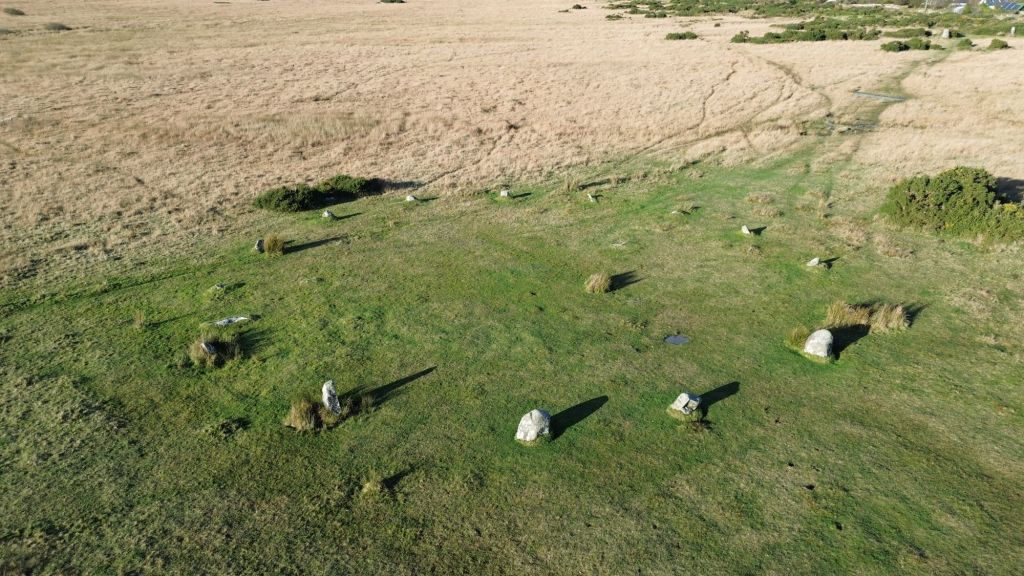
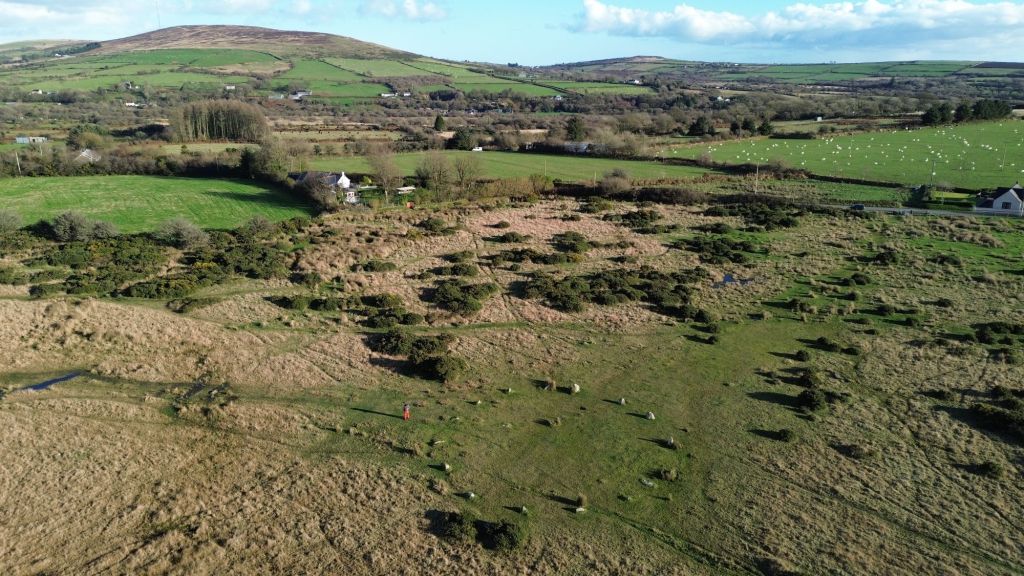
Just over 20 meters in diameter, the 16 stones form a very regular circle, Coflein describes the stones as.. “not large, ranging in height from 0.3 metres to 1.1 metres, geophysical surveys suggest it probably looked much the same today as it did to its late Neolithic or Bronze Age builders… a remarkable survivor and one of the best of its kind to be seen in Wales”.
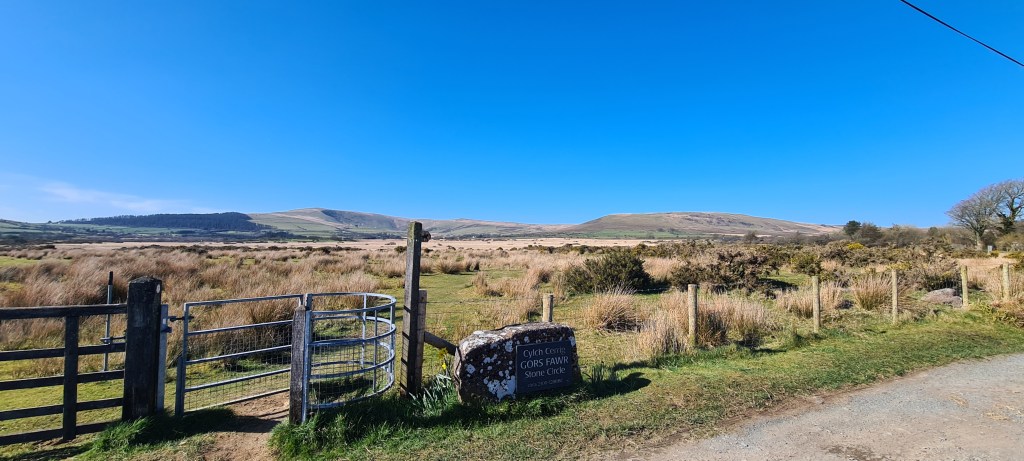
This site is easy to reach, with parking available alongside the road next to the public footpath.
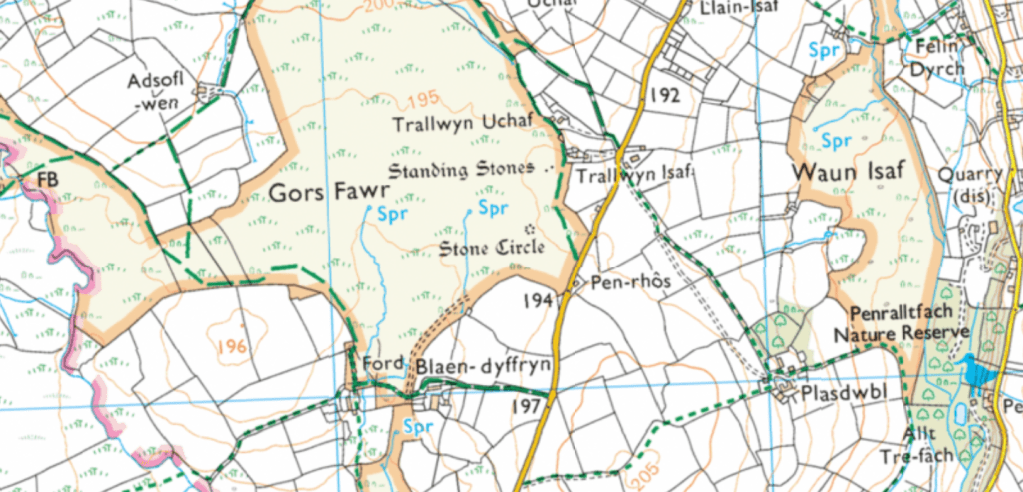
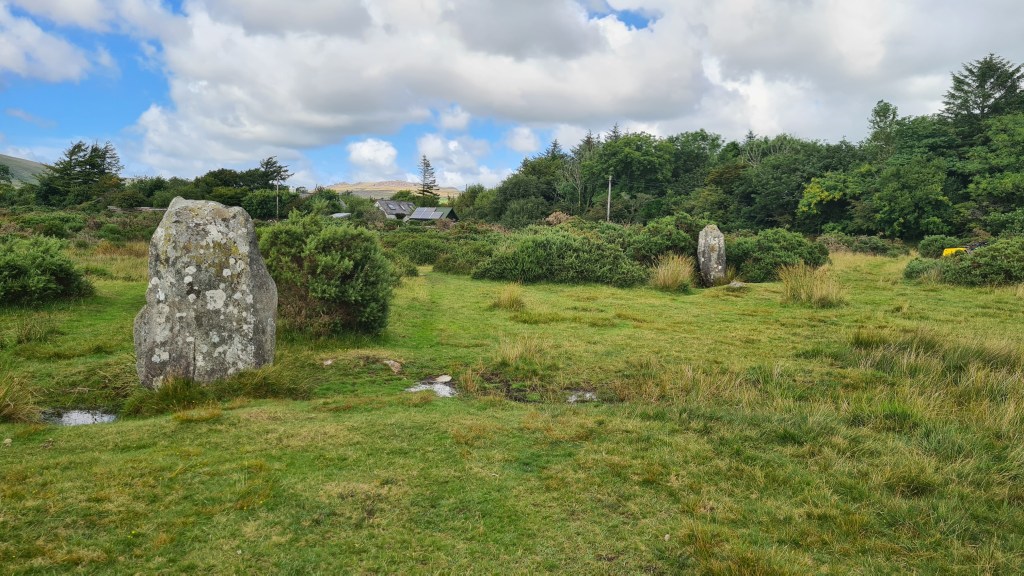
Eight of the sixteen stones are spotted dolerite, the famous local bluestone. Next to the circle are a pair of upright bluestones… it is thought that there would have been an avenue leading to the circle. The most Northerly of these two stones is known locally as The Dreaming Stone and is said to have magical properties.
From ‘A guide to ancient and historic Wales’ by Sian Rees (1992):
“Wales is not noted for its stone circles, and those in Dyfed are generally small and unspectacular. The charming circle at Gors Fawr, however, is comparatively large and is justly famous both for the fine preservation of its atmospheric setting. It is situated in the foothills of the Preselis within sight of at least some of the famous bluestones of Stonehenge. The rough ground around it is peat-covered and often boggy and lies at the eastern end of the mysterious, wind swept and mist-ridden Gors Fawr moor.
The circle has 16 stones, all weather-beaten boulders of igneous rock, which stand up to 1m in height. One stone on the south-west and another on the north have fallen while through the ages others have gradually become tilted. The stone setting is not quite circular, as its east-west diameter (22.5m) is somewhat greater than the north-south measurement. The sizes of the stones themselves vary according to their position in the circle which seems to be slightly graded towards the south-west. Two more tall stones, about 2m in height, stand 134m to the north-east of the circle. They were probably associated with the circle despite their apparent lack of symmetry with it. Some authorities consider these outliners to contain their own axial alignment on midsummer sunrise over the nearby Foeldyrch hilltop, 1.5ml (2.4km) away to the east. The area surrounding Gors Fawr circle is littered with boulders and may conceal further stone settings or other features.
This site is one of a number of ritual monuments which cluster in this part of the foothills of the Preselis, obviously a place of great importance in the 3rd and 2nd millennium BC. Burial chambers of the early Neolithic lie not far away at Dolwilym and Carn Besi and there may have been another at Temple Druid, Maenclochog – these public monuments may have been superseded in the late Neolithic by the henge at Castell Garw, and later again by the stone circles here and at Meini Gwyr and by the numerous single and paired standing stones which are common in the area. It is possible that these monuments reflect the importance attached to the Preseli area as a source of a good raw material for the prestigious polished stone axes of the Neolithic, a stone of such renowned worth that it was chosen for use at distant Stonehenge.”
–https://archive.org/details/guidetoancienthi0000rees/page/36/mode/1up?q=gors
Here is the video we made covering the history and legends of Gors Fawr and Stone Circles in Wales –


Leave a comment