
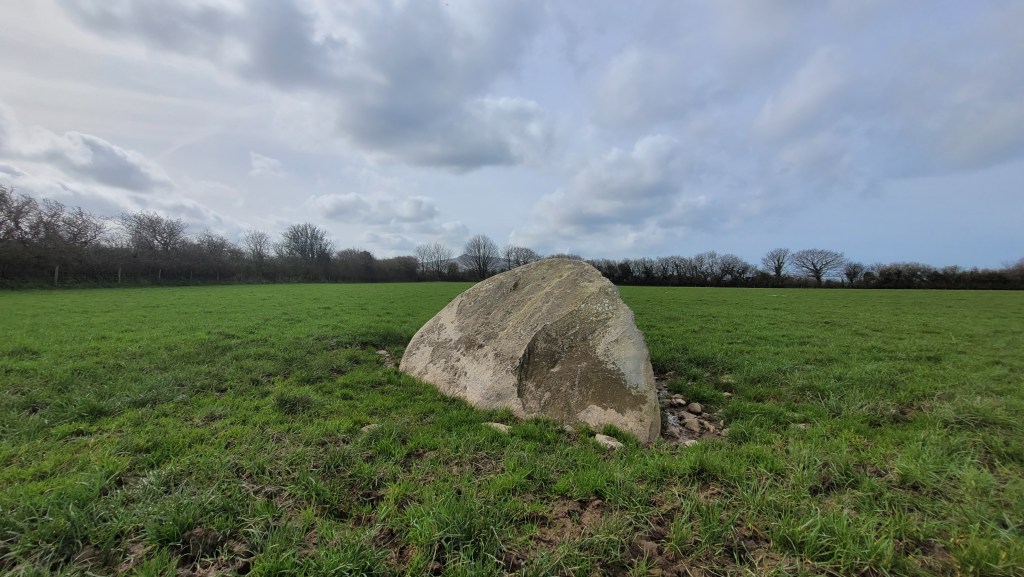

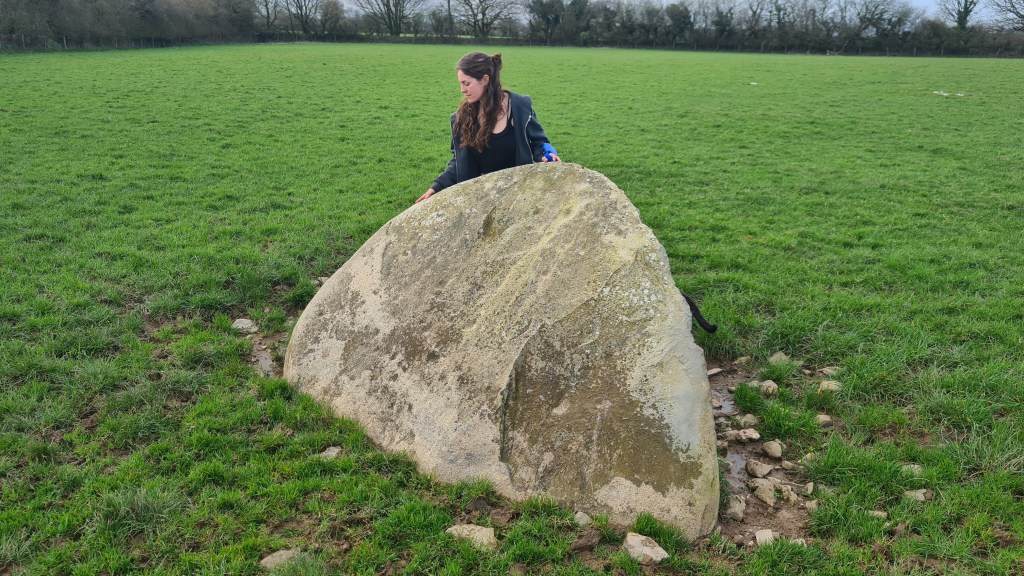
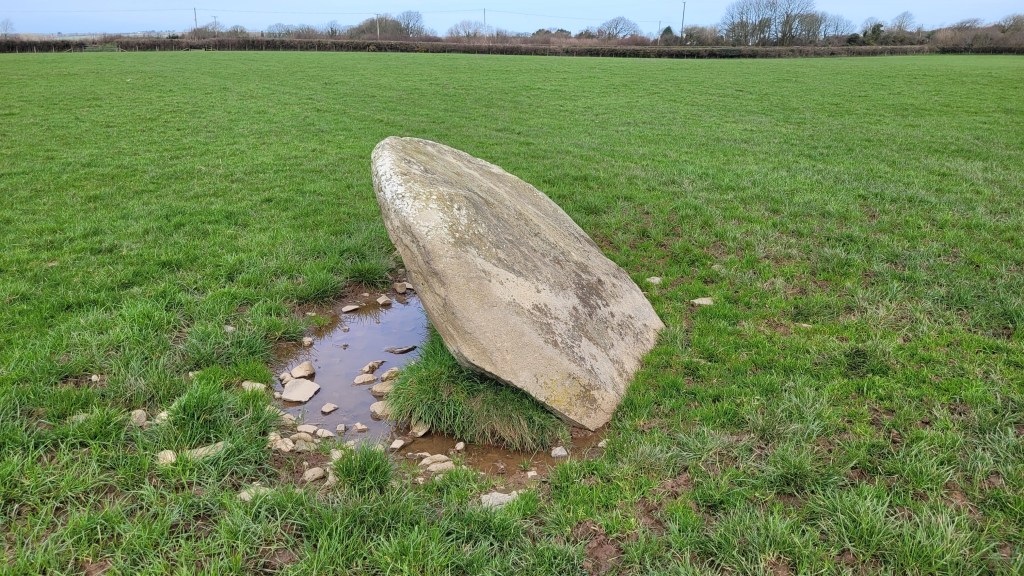
Near the village of Nevern in Pembrokeshire, Wales is the Trefael Stone.
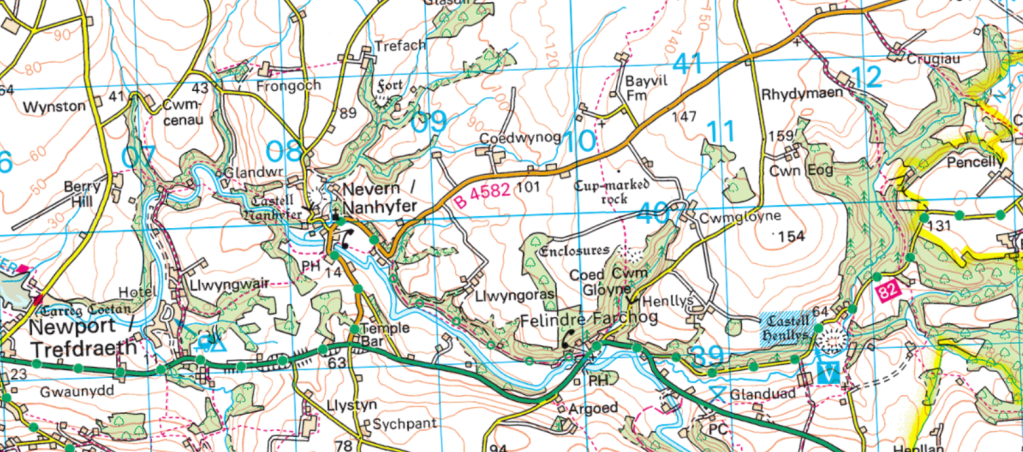
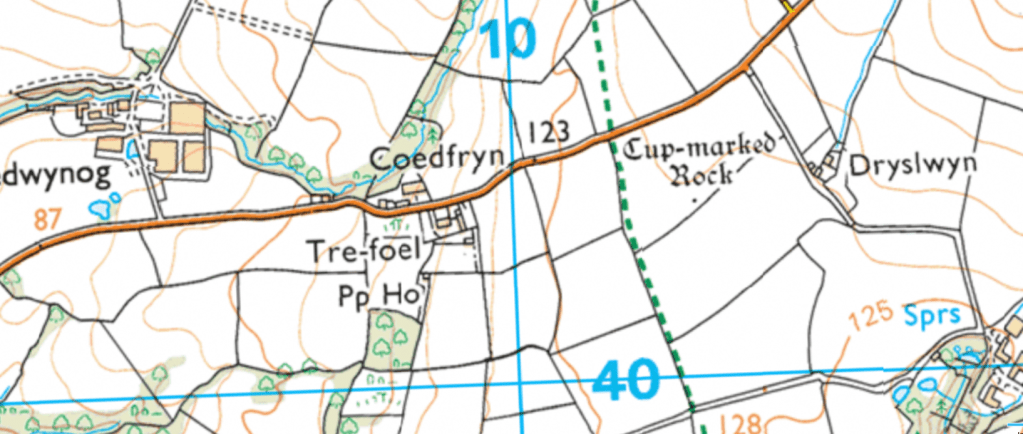
The stone is comprised of silicified sandstone, measuring around 2.3m by 2m and is covered in a form of prehistoric rock art known as ‘cupmarks’. Previously just 45 cupmarks were recorded on the upper surface of the stone, each with a mean diameter of c. 5cm (the largest being c. 10cm in diameter). However, excavations led by Dr Geroge Nash and colleagues between 2010 and 2012 revealed at least 75.
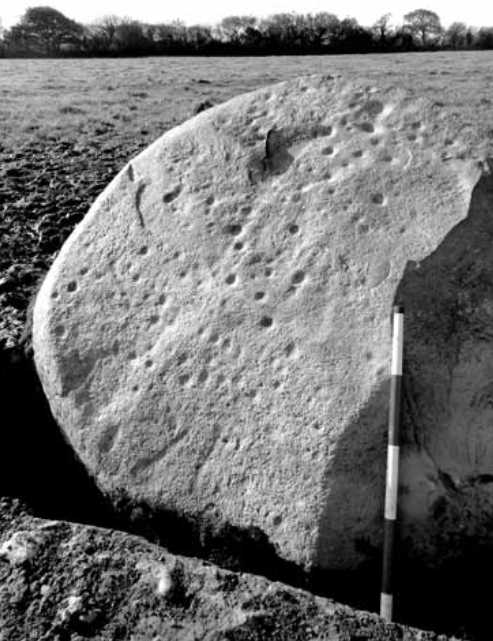
The Trefael Stone was considered until recently to have been a solitary standing stone. But research at the site proved that this stone likely once formed part of a more complex monument, likely a Portal Dolmen.
The following is quoted from Geroge Nash in ‘Mechanisms of Production and Exchange: Early Prehistoric Perforate Bead Production and Use in Southwest Wales’:
“The Trefael Stone was until recently considered to be a solitary standing stone, probably Neolithic or Bronze Age date and contained up to 75 cupmarks on its upper surface. But a geophysical survey undertaken in September 2010 revealed the remains of a kidney shaped cairn and it was within this clear feature that the two perforated stone beads and other later prehistoric items were found. Each bead, measuring c.4.5cm in diameter, was found within a disturbed cairn (or post-cairn) deposit. Based on the geophysical survey and subsequent excavation, it is now believed that the Trefael Stone is a capstone that would have covered a small burial chamber belonging to a probable Portal Dolmen, one of western Britain’s earliest Neolithic burial-ritual monument types. At some point during its demise as a Portal Dolmen, the capstone was placed into a vertical slot, where it became a standing stone, probably during the Bronze Age. The excavation of the slot would have disturbed contemporary and earlier deposits, hence the residual nature of the two beads (and other items).” – https://www.researchgate.net/publication/275821093_Mechanisms_of_Production_and_Exchange_Early_Prehistoric_Perforated_Bead_Production_and_Use_in_Southwest_Wales
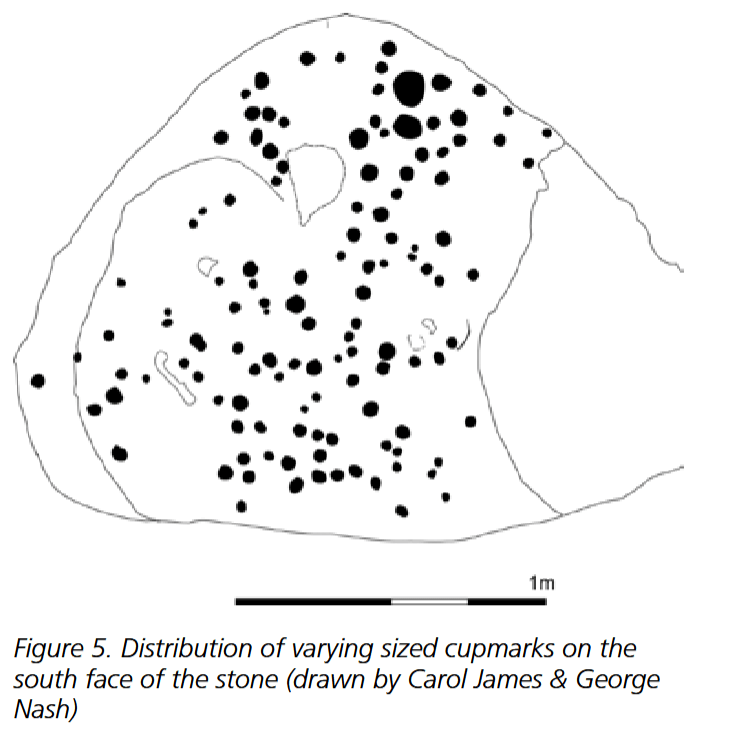
To read the excavation report, by George Nash, Adam Stanford, Isabelle Therriault and Thomas Wellicome, here is the link – https://coflein.gov.uk/media/76/706/dd2012_018_003.pdf
Overlying the supposed Neolithic ground surface, immediately south-west of the capstone, the remains of a possible Bronze Age stone burial cist were found. The following is quoted from Geroge Nash’s ‘Trefael: The Dolmen that became a standing stone’ published in 2013 :
“Last September the team returned once more, to battle the inclement weather, reopen the 2011 trenches, and sink another trench some 35m west of the Trefael Stone. Returning to the trench containing the cremated burial, our most recent excavations revealed further informa- tion about the cairn, which survived remarkably intact despite previous ploughing. Directly west of the stone lay a small area of sandy soil that contained the remains of a human cremation burial and associated Late Neolithic pottery.”
–https://www.academia.edu/3558108/Trefael_The_Dolmen_that_became_a_standing_stone


Leave a comment