
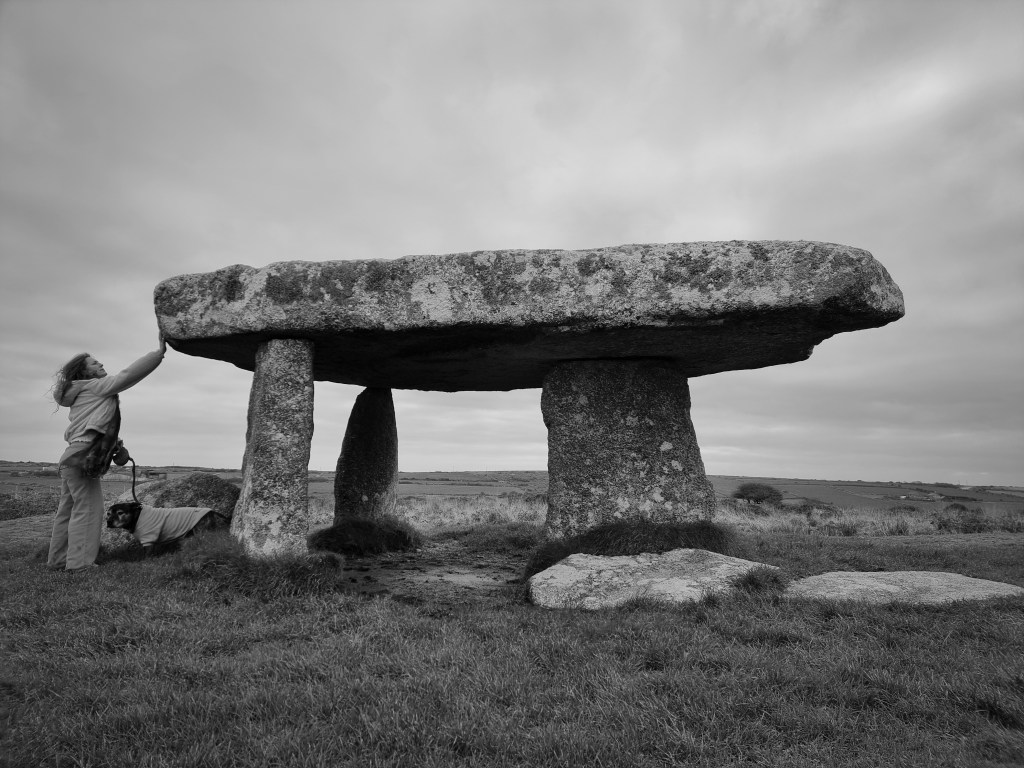

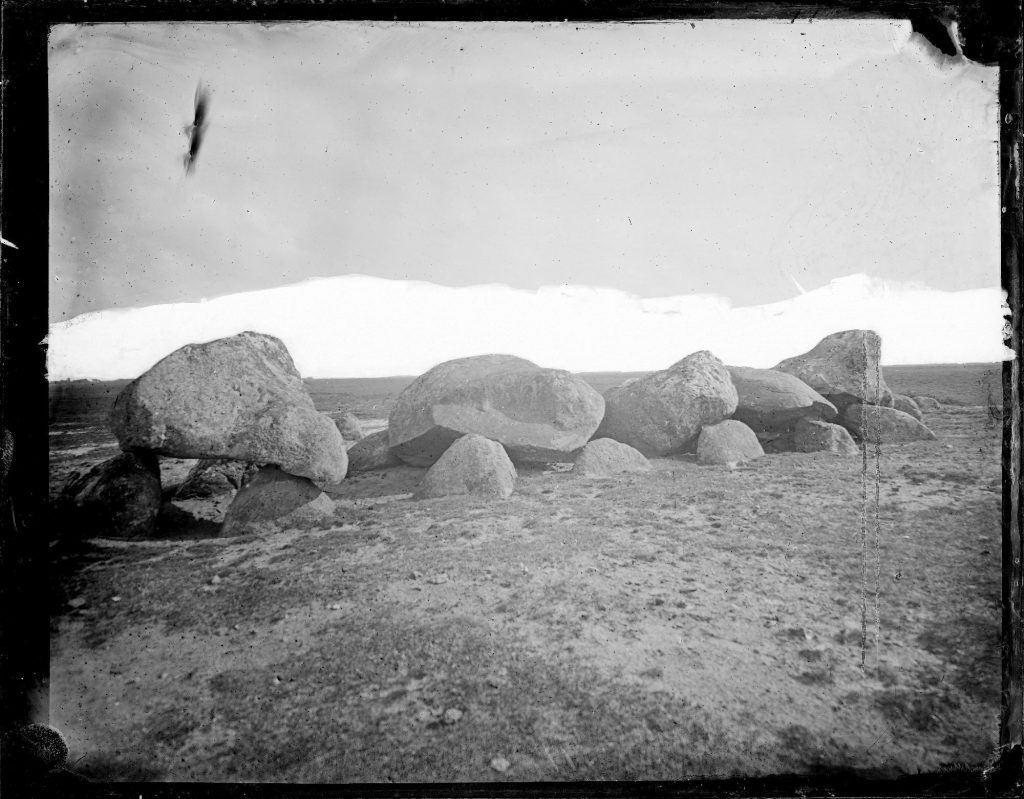
Neolithic Dolmen in Cornwall, UK.
Map Ref: SW4298033690
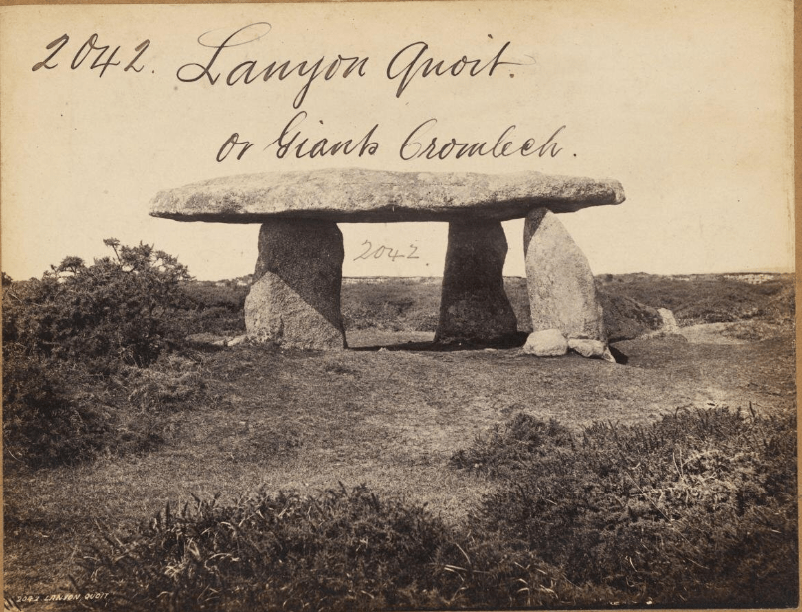
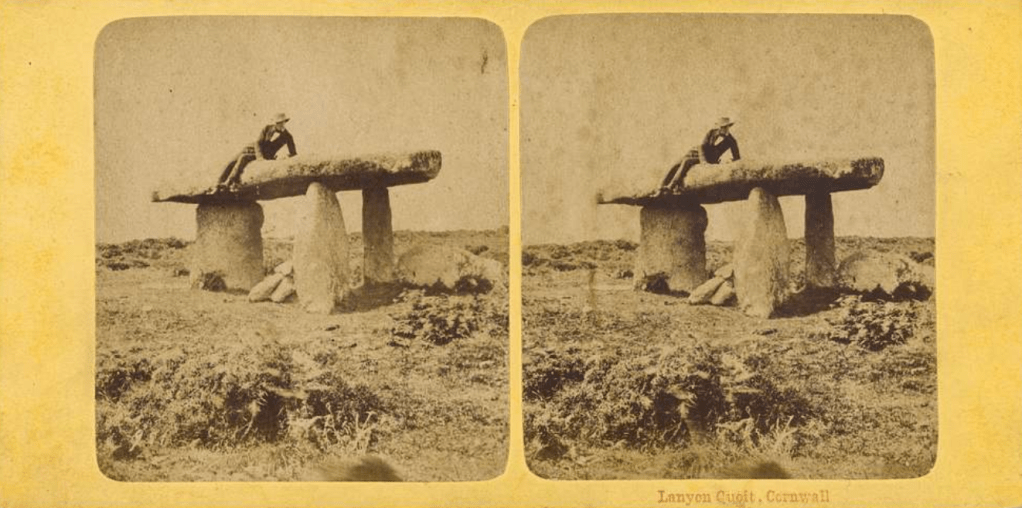
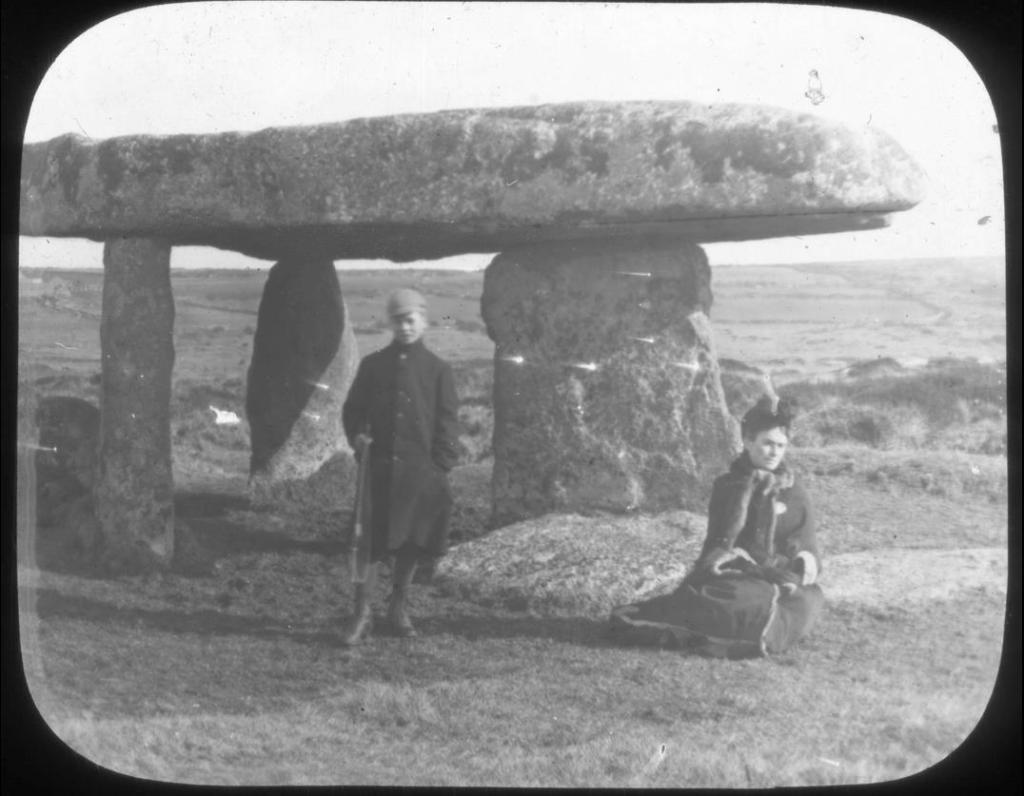
Lanyon Quoit is one of the most iconic of Cornish antiquities. It is also the most restored; its present form differs considerably from its original. It was once described as being high enough for a man on horseback to pass beneath, but was destroyed by an exceptionally violent storm in 1815. A public subscription was taken for its restoration and in 1824, the work began to reassemble the monument. The work was carried out by Captain Giddy, using the same machinery being used for the purpose with which Lieutenant Goldsmith R.N. had previously restored the celebrated Logan Rock to the position from which he had tumbled it.
Only three of the original supports were used, and these were shortened and squared off, so the capstone is no longer as high off the ground as it was previously. A piece of the capstone was also chipped off it during restoration and now measures 2 feet less.
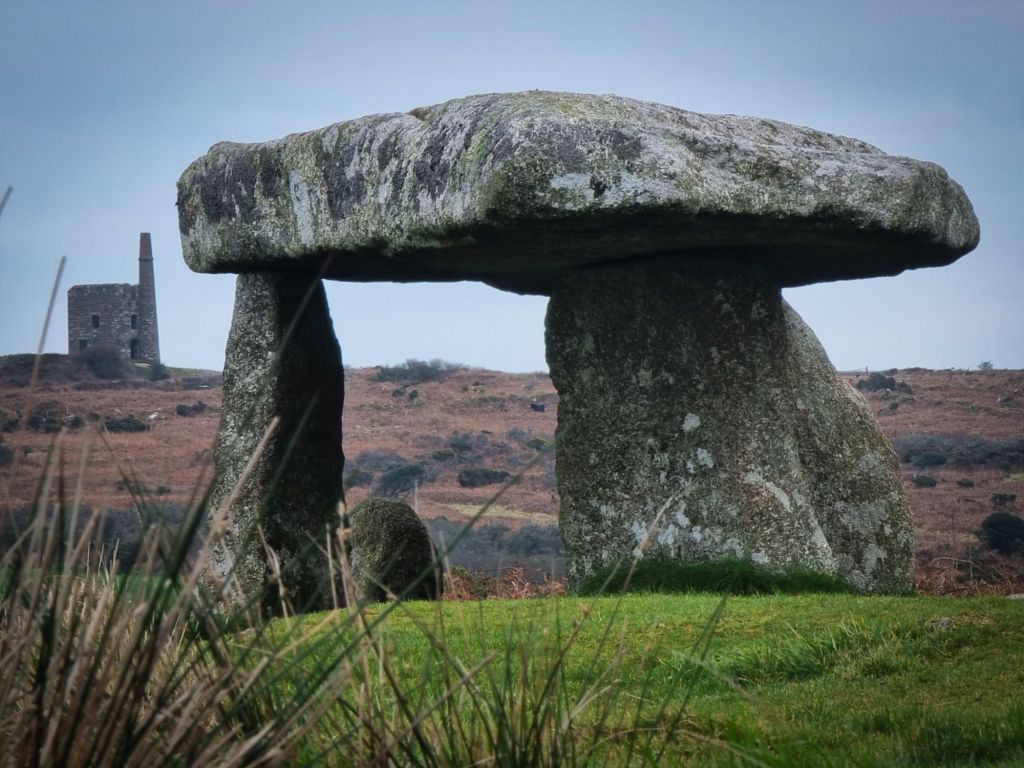
The following is Ian Cooke’s description of Lanyon Quoit, from Journey To The stones; Guided Walks To The Old Stones Of The Land’s End Peninsula, 1996:
“Although this National Trust site attracts more visitors than to any other cromlech, being in a prominent position a few yards from the road, it is the least authentic and is essentially a Victorian reconstruction.
Dr. Borlase recorded it in the mid-18th century when its 13 1/2 ton capstone was still in place, being so far off the ground that a man on horseback could supposedly pass beneath it – earth was probably already removed by previous excavators. The monument was drawn by Rev. Canon Rogers in 1797 when he noted that the supporting stones: “stand obliquely, owing perhaps to the weight and the pits which have been sunk near them by the curious”. Eighteen years later an exceptionally violent autumn storm caused the monument to collapse so that only the northern support stone remained upright – one supporting stone lay on top of the fallen capstone with two others lying broken beneath it.
A public subscription was mounted for its reinstatement. The county historian and Member of Parliament, Davies Gilbert, again used his influence with the Lords of the Admiralty Logan Rock at Treen earlier the same year. This equipment was brought from Devonport Dockyard and, supervised by Captain Giddy R.N., the monument was reassembled. Two support stones were erected, possibly original but shorter due to the accident; consequently the original northern stone had to be shortened considerably (holes drilled to split off the top can still be seen) to provide a reasonably level position on which the capstone could rest…
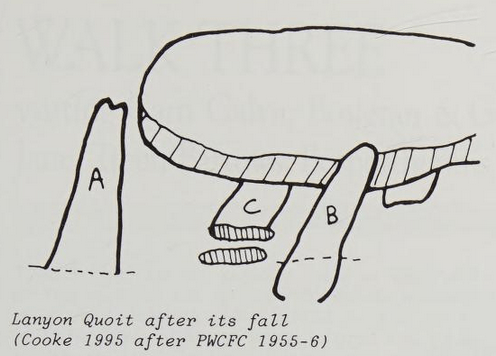
…During this operation a portion of the capstone on the south-western edge was broken off, and completion of the work was recorded by the year AD1824 being inscribed on the west side of the western upright.
In the mid-18th century a pit had been dug beneath the capstone but nothing discovered. It later transpired that the site was disturbed at an earlier date. Apparently the owner of the property was induced in a dream to dig beneath the cromlech but only a simple six foot deep earthen “grave” was discovered cut out of the rab. Lanyon Quoit appears to be part of a long mound, possibly resulting from several stone burial chambers being added onto the southern and northern ends of the site. Former activity in the immediate area of the monument included erection of a Bronze Age menhir and building of barrows (all of which are destroyed), ridge and furrow cultivation, and modern quarrying for moorstone. – https://openlibrary.org/books/OL17495980M/Journey_to_the_stones
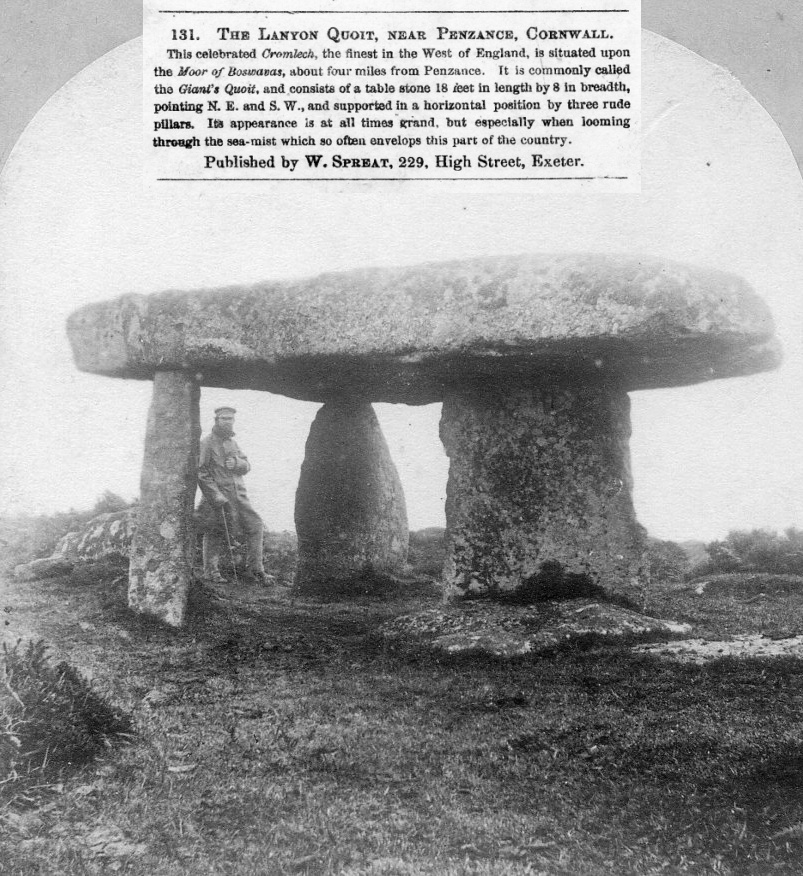
Antiquarian records of Lanyon Quoit
John Thomas Blight visited the site and records it in ‘A week at the Land’s End’, published in 1861:
“The Lanyon Cromleh has a strange appearance when we first get sight of it- standing on high ground it is very conspicuous, and looks not unlike a great tripod. As the Cromleh is found in the countries once inhabited by the Celts, its use is supposed to have originated with that race. the Druids used similar monuments, but they were not exclusively confined to them, as they have been found where the Druids never had footing. Similar monuments appear to have been worshipped in Ireland, and Dr. Borlase refers to one in Wales on which crosses were cut. As it is well known that the early Christians so marked the blocks of stone held sacred by the heathen, that when they knelt to them they might pay a kind of justifiable adoration, it seems probably that some of them were regarded as objects of worship..
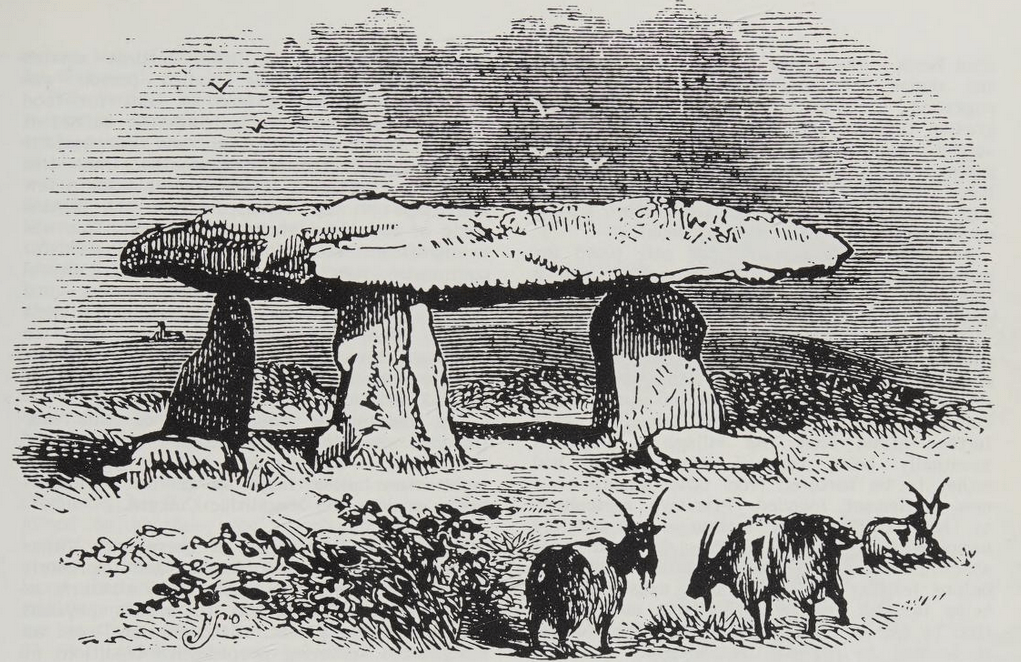
..Some have considered them Druid alters on which sacred fires were kindled, but any one who has seen them will soon dismiss this conjecture, as from their construction they are not applicable to this purpose. They were probably tombs, raised in honour of distinguished personages. Some are formed as kist-vanes, i.e. chests made of stone-this one could never have been so constructed.
Dr. Borlase dug beneath it, and found that a pit had been made there, but he discovered no remains of any consequence. The doctor described this monument as high enough for a man to sit on horseback under it, a feat now impossible, for the height from the ground to the cover stone is only five feet ; the difference between its elevation now and when seen by Dr. Borlase can only be accounted for on the supposition that the supporters were by some means shortened when the top-stone was replaced in 1824 ; in 1816 it was thrown down during a violent storm, and restored to its original position by use of the powerful machinery brought into the country to raise the celebrated Logan Rock. A few yards south of the cromleh are the remains of a small barrow ; which if opened might, perhaps, repay the curious for investigation.
The capstone of the cromleh is eighteen and a half feet long and measures at the broadest part nine feet : its form is irregular – the average thickness is about a foot and a half. It is vain to speculate on the means first employed to raise such a ponderous mass, and
“the heart,
Aching with thoughts of human littleness,
Asks, without hope or knowing, whose the strength
That poised thee here.”
It has been beaten by the storms of ages-
“The naked Briton here has paused to gaze-
Ere bells were chimed,
Or the thronged hamlet smoked with social fires.”
In the middle of a field about half a mile distant is another cromleh overthrown. A skull and other human bones were found beneath it. Ancient remains were formerly very superstitiously regarded ; and it is to be regretted that this kind of respect for them amongst the ignorant is dying out, as is preserved many from destruction. The person who pulled down this cromleh is said to have brought a number of misfortuned about him in consequence ; thus his cattle died and crops failed, which left a warning impression on the minds of his neighbours.
The word cromleh, means a ‘crooked flat stone’. Leh, Cornish, lech, Welsh, a flat stone ; crom, crooked. Lanyon, the name of the estate does not appear to be a Cornish word, though it has been read as such, the interpretation being “the furzy enclosure”. Lan is Cornish for enclosure and also for church ; there was an ancient chapel here dedicated to St. Bridget. It is, however, most probably a French word. There are still in the country descendant of the ancient family of that name, and the popular tradition is that they were derived from two brothers who came over from France with Isabel, consort of Richard II., and gave their names to the bartons on which they fixed their residences ; it is said in confirmation that their arms were the same as those of the town of Lanion in Brittany.” – https://archive.org/details/bub_gb_iOUGAAAAQAAJ/page/n42/mode/1up?q=zennor+cromleh
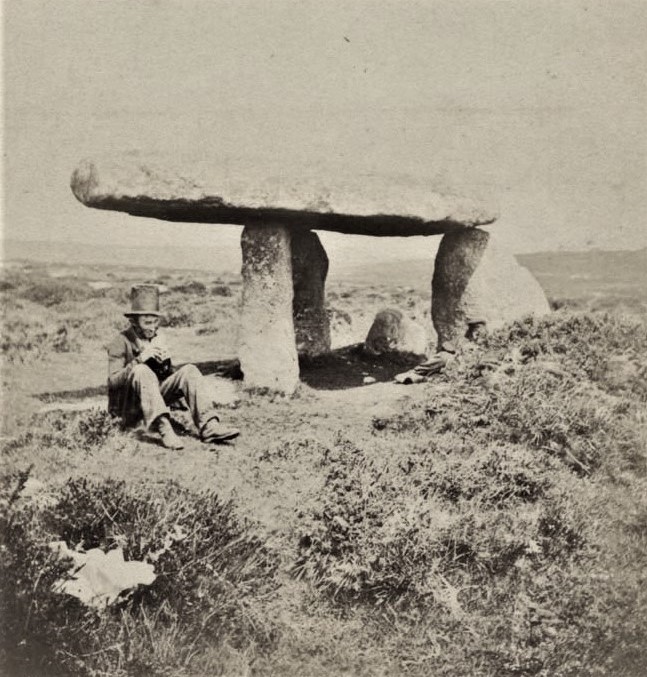
Nænia Cornubiæ, a descriptive essay, illustrative of the sepulchres and funereal customs of the early inhabitants of the county of Cornwall. By William Copeland Borlase, 1872:
“This monument, as will be seen from the accompanying engraving taken from Borlase’s Cornwall, consisted, until its fall in the year 1815, of three slim pillars of unhewn granite, supporting on their summits a horizontal stone, at a sufficient height from the ground to permit a man mounted on horseback to sit under it. .
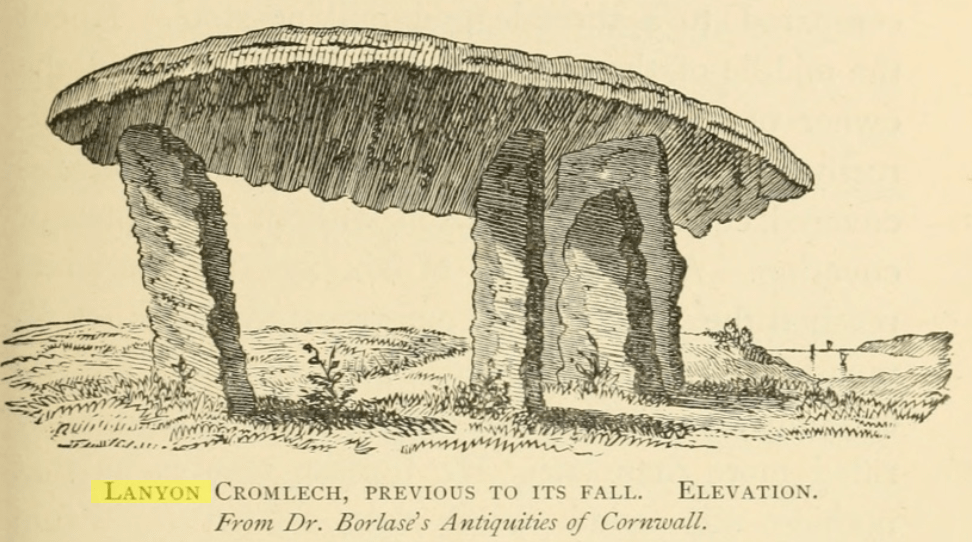
..The cap stone, or “quoit”, as it is termed in Cornwall, measured (before a piece was broken off it), 47 feet in circumference, and averaged 20 inches thick. Viewed from the opposite hill, for it stands on high ground, the whole structure may not, even in its present stunted form, (it was set up again in 1824, but several of the stones had been broken, and one of the supporters bears marks of recent cleavage. At present a person must stoop to pass under it) be inaptly compared to a three legged milking stool. About the middle of the last century, a dream induced the owner of the property to dig beneath it, and directly under the “quoit” a simple grave was discovered, cut in the natural soil, without side stones or covering. At the depth of six feet the explorers reached the bottom ; but unfortunately the other dimensions are not recorded. Although the pit was carefully searched on that occasion, and subsequently rifled more than once, Dr. Borlase assures us that nothing was found “more than ordinary”. From this discovery, it seems quite clear that inhumation was the mode of burial practiced in this case ; for had cremation taken place, ashes, or at all events strata of burnt earth, would have been found ; and it is only on the supposition that the corpse was laid unprotected in the porous ground, without any imperishable articles accompanying it, that the total absence of relics in the grave can be at all accounted for. Had the length of the cavity been recorded, some inference might have been formed as to the position in which the body was placed ; that is, whether it was extended at full length, or contracted, with the knees bent up towards the chin. Trivial as such a distinction may at first sight appear, it is just one of those points which, if carefully followed up, may one day become valuable to the ethnologist in distinguishing the lines of demarcation to be drawn between the various races or tribes inhabiting this country in the primitive era.” – https://babel.hathitrust.org/cgi/pt?id=uc2.ark:/13960/t9r213s92&seq=47&q1=lanyon


Leave a comment